
What Parents Should Know About AI in Schools
Artificial Intelligence (AI) is no longer something reserved for tech companies or science fiction—it’s quickly becoming part of everyday learning in schools. From personalized tutoring tools to creative projects powered by machine learning, AI is reshaping how students learn, think, and prepare for the future.
But for many parents, this shift raises important questions: What exactly is AI? How is it being used in classrooms? And is it safe for my child?
Here’s what every parent should know about AI in schools—and why it matters more than ever.
What Is AI in Education?
In simple terms, AI refers to technology that can mimic human thinking—like problem-solving, pattern recognition, and decision-making.
In schools, this can look like:
- Adaptive learning platforms that adjust to your child’s pace
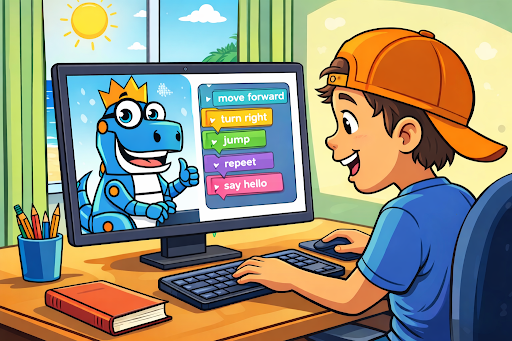
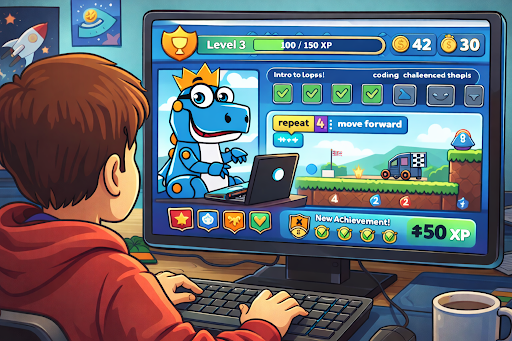
- AI-powered writing assistants or coding tools
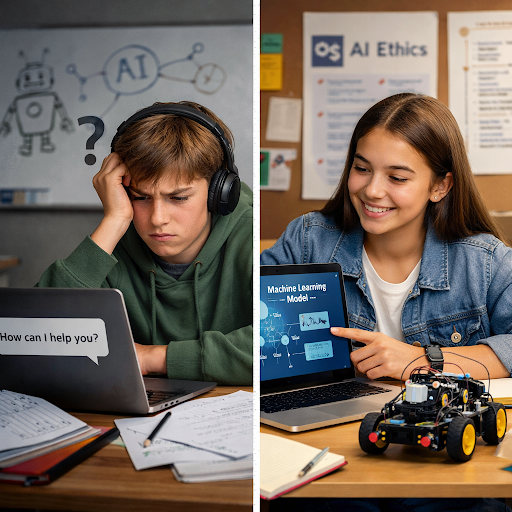
- Chatbots that help answer questions or guide learning
- Programs that introduce students to machine learning and real-world tech skills
AI isn’t replacing teachers—it’s enhancing the learning experience and giving students access to tools that were unimaginable just a few years ago.
Why Schools Are Introducing AI
AI is being integrated into education for one key reason: the future of work is changing.
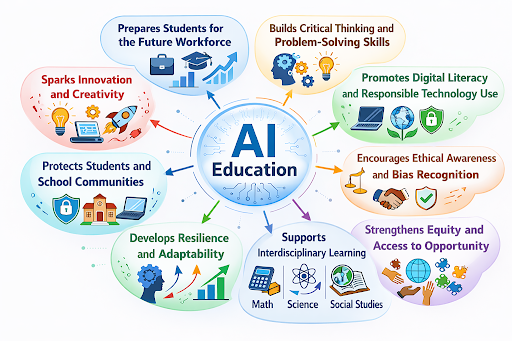
Many of today’s fastest-growing careers involve technology, data, and automation. By introducing AI early, schools are helping students:
- Build critical thinking and problem-solving skills
- Understand how technology works (not just how to use it)
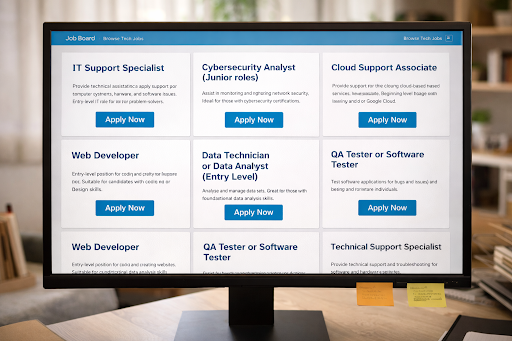
- Prepare for high-demand, high-paying careers
- Become creators of technology—not just consumers
Students who understand AI will have a significant advantage in the workforce.
The Benefits of AI for Students
When used correctly, AI can be incredibly powerful in supporting student success.
1. Personalized Learning
AI tools can adjust to each student’s level, helping them move faster when they’re ready or slow down when they need support.
2. Increased Engagement
Interactive, tech-driven lessons can make learning more exciting and relevant—especially for digital-native students.
3. Real-World Skill Building
Students gain exposure to coding, data analysis, and AI concepts that directly connect to future careers.
4. Immediate Feedback
AI systems can provide instant feedback, helping students learn from mistakes in real time.
Common Concerns Parents Have (And What to Know)
It’s completely normal to have concerns about AI in schools. Here are a few of the most common—and what they really mean.
“Will AI replace teachers?”
No. Teachers remain the most important part of education. AI is simply a tool that helps teachers personalize instruction and save time on repetitive tasks.
“Is AI safe for my child?”
When implemented responsibly, AI platforms used in schools follow strict privacy and data protection guidelines. Schools and providers should prioritize student safety and transparency.
“Will my child rely too much on technology?”
The goal of AI education isn’t dependence—it’s understanding. Students are taught how AI works, when to use it, and its limitations.
“Is this just a trend?”
Not at all. AI is a foundational technology that will continue to shape nearly every industry. Learning it now is similar to learning computers in the early 2000s.
What Parents Should Look For in an AI Program
Not all AI education is created equal. If your child’s school is offering AI-based learning, here are a few things to look for:
- Age-appropriate curriculum that builds skills progressively
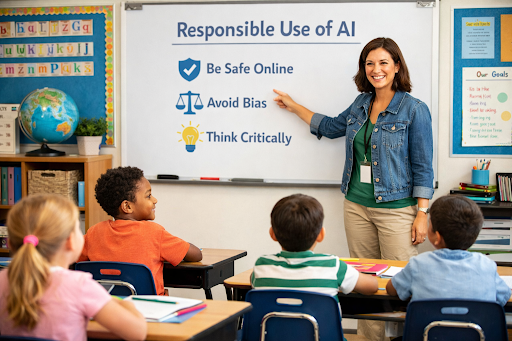
- Focus on ethics and responsible use of AI
- Hands-on learning opportunities, not just passive tools
- Teacher support and guidance, not fully automated instruction
- Clear communication about how AI tools are used
The best programs balance innovation with structure and support.
How Parents Can Support AI Learning at Home
You don’t need to be a tech expert to support your child.
Here are a few simple ways to stay involved:
- Ask your child what they’re learning about AI
- Encourage curiosity and experimentation
- Discuss how AI is used in real life (apps, recommendations, etc.)
- Talk about responsible and ethical use of technology
Showing interest goes a long way in building confidence and understanding.
The Bottom Line
AI in schools isn’t about replacing traditional learning—it’s about enhancing it.
Students today are growing up in a world where AI will be part of nearly every career path. By introducing these concepts early, schools are giving them the tools to succeed, adapt, and lead in a rapidly changing world.
For parents, the goal isn’t to have all the answers—it’s to stay informed, ask questions, and support your child as they learn to navigate the future.
Preparing Your Child for an AI-Driven Future
At Rex K–12, we believe every student deserves access to meaningful, future-ready technology education. Our programs introduce students to AI, coding, cybersecurity, and more—through engaging, structured, and age-appropriate learning experiences.
Whether your child is just getting started or ready to dive deeper, there’s a pathway designed to meet them where they are.