2D Game Programming as a Gateway to Real Development Skills
Why Start with 2D Games?
For many students, the idea of “learning to code” can feel abstract, overwhelming, or even intimidating. But building a game? That’s exciting, tangible, and immediately rewarding.
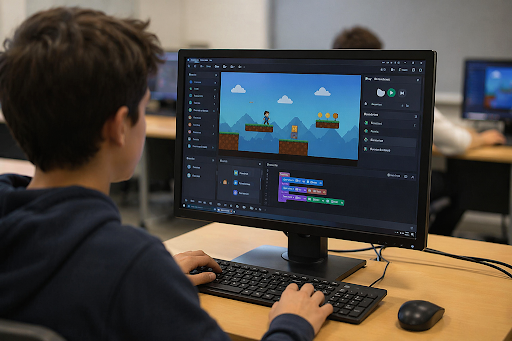
2D game programming offers a unique entry point into computer science because it blends creativity with logic. Instead of staring at lines of code with no clear outcome, students see their work come to life in real time—characters move, collisions happen, scores increase, and suddenly, coding has a purpose.
This is exactly why this education is so powerful. It removes unnecessary barriers while still exposing students to the foundational concepts behind real-world software development.
Learning by Building (Not Just Watching)
One of the biggest advantages of 2D game programming is that it’s inherently project-based. Students aren’t just consuming information—they’re actively creating.
As they build games, they naturally learn:
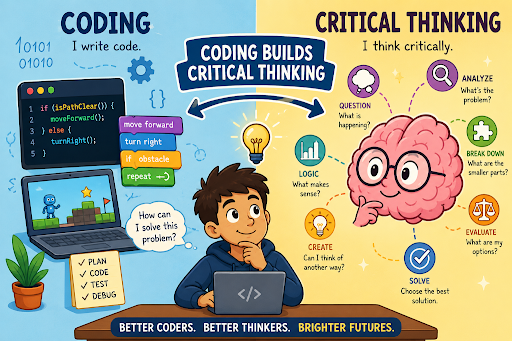
- How to break down a big idea into smaller, manageable parts
- How to test, troubleshoot, and iterate
- How to think logically about cause and effect
Instead of memorizing syntax, students develop problem-solving habits that mirror what real developers do every day.
Core Programming Concepts in Disguise
What makes 2D game development so effective is that it teaches real programming concepts—just in a more engaging format.
1. Logic and Conditionals
Games rely on decisions:
- If a player touches an obstacle → lose a life
- If a score reaches 100 → advance to the next level
Students learn conditional thinking without even realizing it.
2. Variables and Data Tracking
Scores, health bars, timers—these are all variables. Students quickly understand how data is stored and updated dynamically.
3. Event-Driven Programming
Every game is built on events:
- A key is pressed
- A button is clicked
- Two objects collide
This mirrors how modern applications work, from websites to mobile apps.
4. Debugging and Iteration
Games rarely work perfectly the first time. Students must test, identify issues, and refine their designs—developing resilience and attention to detail.
Bridging the Gap to “Real” Development
A common misconception is that beginner-friendly tools aren’t preparing students for “real coding.” In reality, platforms like Rex Curriculum paired with FlowLab act as a bridge.
Here’s how:
- Visual logic systems mimic programming structures used in languages like JavaScript and Python
- Game mechanics reflect real-world software systems (inputs, outputs, state changes)
- Project workflows mirror professional development cycles
Once students understand how systems work, transitioning to text-based coding becomes significantly easier.
Building Skills Beyond Code
2D game programming doesn’t just teach technical skills—it develops well-rounded thinkers.
Students also gain experience in:
- Creative design (characters, environments, storytelling)
- User experience (what makes a game fun or frustrating?)
- Collaboration (sharing ideas, testing each other’s games)
- Persistence (working through challenges and failures)
These are the same soft skills valued in modern tech careers and beyond.
Immediate Engagement, Long-Term Impact
One of the biggest challenges in education is keeping students engaged long enough to build meaningful skills. 2D game programming solves this by offering:
- Instant visual feedback
- Clear goals and rewards
- Opportunities for personalization
Students aren’t just learning—they’re invested.
And that investment leads to deeper learning, stronger retention, and increased confidence in their abilities.
A Launchpad for Future Pathways
Once students complete a 2D game programming course, they’re not just “done”—they’re ready for more.
This foundation can lead to:
- Advanced game development (3D engines, physics systems)
- Web development (interactive applications)
- Mobile app development
- Cybersecurity and systems thinking
- Artificial intelligence and simulation design
The skills transfer because the fundamentals remain the same.
Final Thoughts
2D game programming is more than just a fun activity—it’s a strategic entry point into the world of technology.
By using available tools, educators can lower the barrier to entry while still delivering meaningful, industry-relevant skills.
When students build games, they’re not just playing—they’re thinking like developers.
And that mindset is what truly prepares them for the future.