Ending Generational Poverty Through Computer Science
For generations, education has been viewed as one of the most powerful paths out of poverty. While that remains true, the skills that create economic opportunity have changed dramatically. In today’s digital economy, computer science has become one of the most valuable subjects students can learn. More than preparing students for careers in technology, computer science equips them with the problem-solving abilities, confidence, and career flexibility needed to break cycles of generational poverty.
When schools make computer science education accessible to all students, they are investing in long-term economic mobility for families and communities.
Understanding Generational Poverty
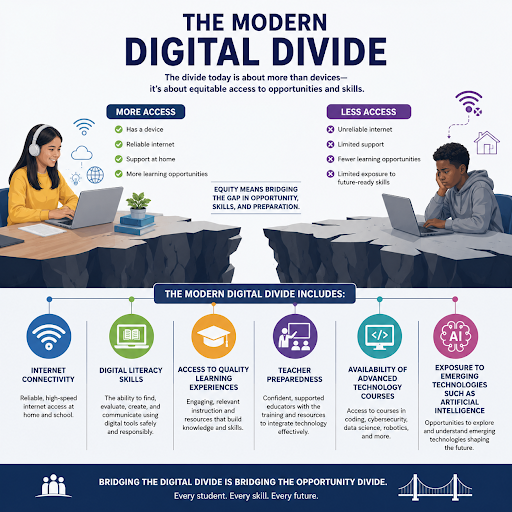
Generational poverty occurs when multiple generations of a family experience persistent financial hardship. While every family’s story is unique, students growing up in poverty often face barriers such as:
- Limited access to advanced coursework
- Fewer technology resources at home
- Reduced exposure to high-paying career pathways
- Smaller professional networks and mentorship opportunities
These challenges can make it difficult to compete in an increasingly technology-driven workforce. Schools have an opportunity to help level the playing field by ensuring every student has access to meaningful computer science education.
Computer Science Opens Doors
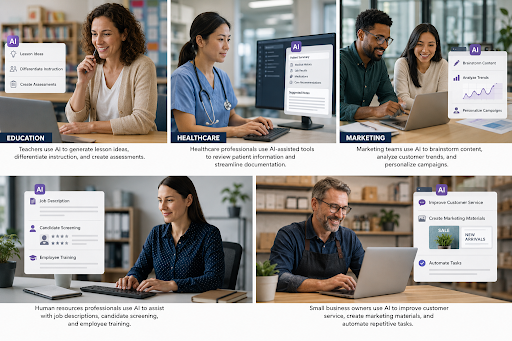
One of the greatest strengths of computer science is that it creates opportunities across nearly every industry. Students no longer have to become software engineers to benefit from learning technology skills.
Healthcare organizations need data analysts and cybersecurity professionals.
Manufacturing companies rely on automation specialists and programmers.
Banks hire technology support teams and AI specialists.
Agriculture increasingly uses drones, sensors, and data analytics.
Even small businesses now depend on websites, digital marketing, AI tools, and cybersecurity practices.
Technology skills have become foundational to almost every career sector, creating countless opportunities for students regardless of where they live.
Skills That Employers Value
Computer science teaches much more than programming.
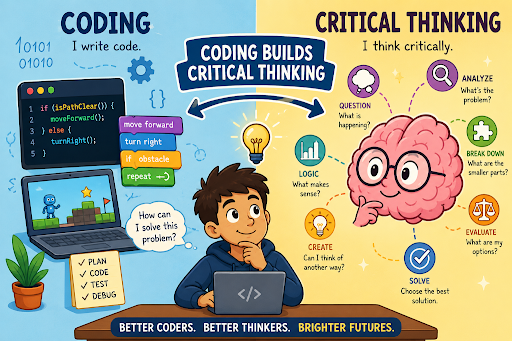
Students develop valuable workplace skills including:
- Critical thinking
- Logical reasoning
- Creative problem solving
- Collaboration
- Communication
- Adaptability
- Persistence through challenges
These transferable skills prepare students to succeed whether they pursue careers in technology, healthcare, business, education, engineering, or entrepreneurship.
High-Paying Careers Without Traditional Barriers
Many technology careers offer competitive salaries while requiring less financial investment than some traditional professions.
Industry certifications, technical colleges, apprenticeships, community colleges, and workforce development programs provide multiple pathways into well-paying careers. Students who cannot immediately pursue a four-year degree still have opportunities to enter the workforce with valuable credentials and continue advancing throughout their careers.
For many families, this accessibility can be life-changing.
Building Confidence Through Creation
Computer science transforms students from technology consumers into technology creators.
Instead of simply using apps, students learn how to design them.
Instead of wondering how artificial intelligence works, they begin building with it.
Instead of feeling intimidated by technology, they develop confidence in their ability to solve real-world problems.
That confidence often extends well beyond the classroom. Students begin to see themselves as innovators capable of creating solutions for their communities and future employers.
Why Early Exposure Matters
Students cannot aspire to careers they have never seen.
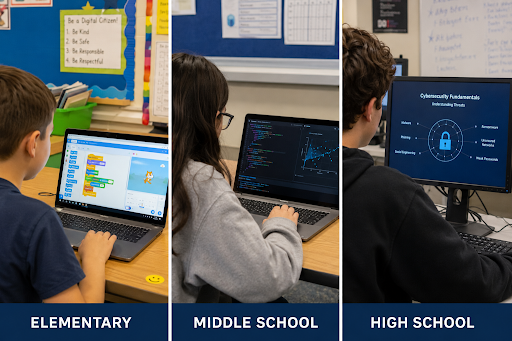
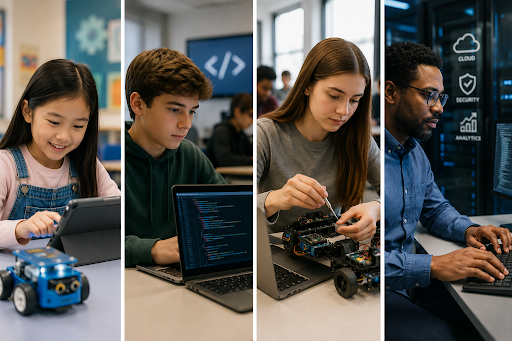
Introducing computer science in elementary school sparks curiosity and builds foundational thinking skills. Middle school allows students to explore programming, cybersecurity, AI, and digital creativity before making important academic decisions. By high school, students can pursue specialized coursework, certifications, internships, and career pathways that prepare them for graduation.
The earlier students begin exploring technology, the more options they have as they enter adulthood.
Equity Begins With Access
Too often, advanced technology courses are available only in well-funded districts or specialized programs.
Expanding computer science education means ensuring students from every background have opportunities to learn:
- Coding
- Artificial intelligence
- Cybersecurity
- Data science
- Digital design
- Computational thinking
When access is limited, opportunity becomes limited as well.
When access is expanded, entire communities benefit.
Creating Stronger Communities
The impact of computer science education reaches far beyond individual students.
Graduates with technology skills earn higher wages, support local businesses, purchase homes, invest in their families, and often mentor future generations. Communities develop stronger workforces, attract new employers, and become more economically resilient.
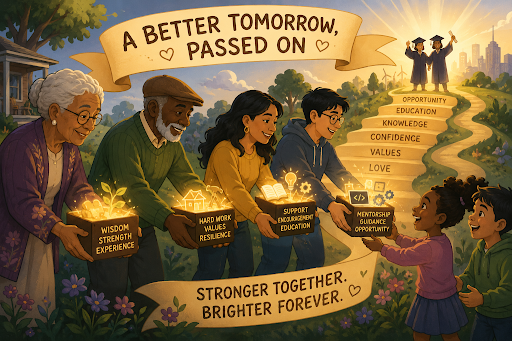
Breaking generational poverty rarely happens through a single opportunity. It happens through consistent access to education, skills, mentorship, and meaningful careers.
Computer science provides all four.
Looking Ahead
Preparing students for the future means preparing them for a world where technology influences every profession. Computer science is no longer an elective reserved for future programmers. It is a foundational literacy that empowers students to think critically, solve problems, and access careers that can transform their lives.
By making high-quality computer science education available to every learner, schools are doing more than teaching technology. They are creating opportunities that can change the trajectory of families for generations to come.