
AI Tools Your Teen Is Already Using (And How to Guide Them)
Parents often picture artificial intelligence as something their teens might use someday. The reality is much different. Many teenagers are already interacting with AI every day, often without realizing it. From social media recommendations and homework assistance to photo editing and music playlists, AI has quietly become part of everyday life.
The goal isn’t to prevent teens from using AI. Instead, it’s to help them use it wisely. Just as previous generations learned how to navigate the internet and social media, today’s students need guidance on using AI responsibly, ethically, and effectively.
AI Is Already Everywhere
Even if your teenager has never opened ChatGPT, they’re almost certainly using AI through apps and services they already enjoy.
Some of the most common examples include:
- Personalized TikTok, YouTube, and Instagram feeds
- AI-powered search results
- Snapchat filters and image generation
- Spotify and Netflix recommendations
- Grammar and writing suggestions
- AI chatbots for homework or brainstorming
- Photo editing and image enhancement tools
Many teens don’t think of these features as “AI.” They simply see them as part of the apps they’ve always used.
The Opportunity Is Bigger Than Homework
When parents hear “AI,” they often worry about students using it to cheat. While academic honesty is an important conversation, it’s only one piece of a much larger picture.
Used responsibly, AI can help students:
- Brainstorm ideas for essays or projects
- Practice difficult concepts through personalized explanations
- Learn coding or programming
- Generate creative writing prompts
- Organize study plans
- Improve presentations
- Explore career interests
- Learn new technical skills
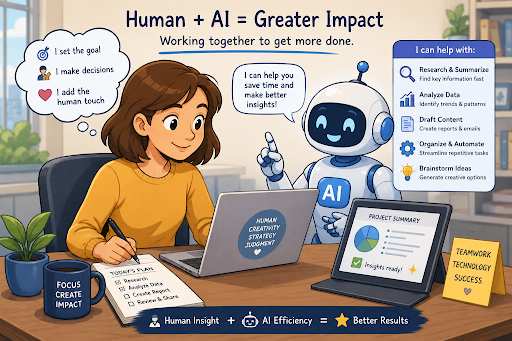
The most valuable use of AI isn’t replacing thinking. It’s enhancing learning.
Teach Teens to Question AI
One of the most important digital literacy skills today is healthy skepticism.
AI can sound incredibly confident while being completely wrong. Encourage your teen to ask questions like:
- Where did this information come from?
- Can I verify this somewhere else?
- Does this answer actually make sense?
- Is the information current?
- Could there be bias in this response?
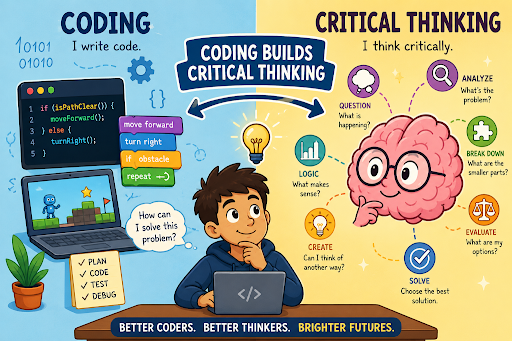
Helping students verify information develops critical thinking skills that extend far beyond AI.
Explain That AI Doesn’t “Know” Everything
Many students assume AI works like an all-knowing search engine.
In reality, AI predicts the next most likely words based on patterns in data. While it often produces helpful responses, it doesn’t truly understand information the way humans do.
Teaching teens this difference helps them become smarter users instead of passive consumers.
Discuss Privacy Early
Many AI tools collect information from user interactions.
Parents should remind teens to avoid sharing:
- Personal addresses
- Phone numbers
- Passwords
- School login credentials
- Medical information
- Financial information
- Sensitive family details
A simple rule works well:
Never type into an AI tool anything you wouldn’t feel comfortable sharing publicly.
Focus on Prompting, Not Just Asking Questions
One of the most valuable skills students can develop is learning how to communicate effectively with AI.
Instead of asking: “Explain photosynthesis.”
Students can learn to ask: “Explain photosynthesis like I’m a 7th grader using simple language and one real-world example.”
Better prompts almost always produce better results.
This communication skill is becoming increasingly valuable across education and the workplace.
Encourage Creation Over Consumption
Rather than simply asking AI for answers, encourage your teen to use it to create.
They might:
- Design a game
- Write a short story
- Build a website
- Learn a programming language
- Create digital artwork
- Practice a foreign language
- Brainstorm business ideas
- Plan a community service project
The students who benefit most from AI won’t be the ones who let it do the work. They’ll be the ones who use it as a creative partner.
Keep the Conversation Ongoing
Technology evolves quickly, and AI tools change almost monthly. Instead of trying to become an expert overnight, focus on maintaining open conversations with your teen.
Ask questions like:
- “Have you used AI for school lately?”
- “What do you like about it?”
- “Has it ever given you a wrong answer?”
- “How do your teachers want you to use AI?”
- “What would you like to learn how to do with AI?”
Showing curiosity rather than judgment creates opportunities for meaningful discussions about responsible technology use.
Preparing Teens for an AI-Powered Future
Artificial intelligence is becoming as foundational as the internet once was. Tomorrow’s careers, regardless of industry, will increasingly expect employees to understand how to work alongside AI tools.
Parents don’t need to have all the answers. What matters most is helping teens develop curiosity, critical thinking, ethical decision-making, and digital responsibility.
Those skills will serve them far longer than any single AI tool ever will.
Ready to Help Your Teen Build AI Skills?
At Rex Classes, we believe AI literacy is quickly becoming an essential life skill. Our engaging, self-paced AI courses help students move beyond simply using AI to understanding how it works, how to use it responsibly, and how to apply it creatively in school and future careers.
For just $14.99 per month, students receive unlimited access to our growing library of technology courses, including AI Foundations, with a 1-week free trial to get started risk-free.
Learn more and begin your teen’s AI journey today at www.rexclasses.ai.