Preparing High School Students for Tech Careers with Hands-On Coding Lessons
The technology workforce is growing faster than nearly every other sector—and high school is one of the most powerful windows of opportunity to prepare students for it.
While traditional instruction builds foundational knowledge, hands-on coding lessons give students something more powerful: applied skill, confidence, and career clarity. When students actively build, test, debug, and refine real programs, they begin to see themselves not just as learners of technology—but as creators within it.
At Rex K-12, we believe preparation for tech careers must move beyond theory and into authentic practice.
Why Hands-On Coding Matters in High School
High school students are at a pivotal stage. They’re exploring college pathways, workforce options, certifications, and personal interests. Coding courses at this level should do more than introduce syntax—they should simulate real-world problem solving.
Hands-on coding lessons help students:
- Strengthen computational thinking and logical reasoning
- Develop resilience through debugging and iteration
- Build collaboration skills through project-based learning
- Apply math concepts in authentic contexts
- Create portfolio-ready projects
Most importantly, students gain tangible evidence of their capabilities. A completed Python project or functioning Java application carries far more weight than a multiple-choice test.
From Consumers to Creators
Today’s students interact with technology constantly. But tech career readiness requires a shift from consumption to creation.
In hands-on coding environments, students:
- Design their own applications
- Develop interactive games
- Build functional websites
- Automate simple processes
- Work with real programming languages used in industry
Courses such as Intro to Python or Intro to Java give students foundational programming experience while exposing them to career-relevant workflows. They begin to understand how software is structured, how systems communicate, and how logic translates into functionality.
This shift builds both technical fluency and confidence—two essential ingredients for long-term success.
Building Career-Ready Skills
The goal of high school coding programs should not simply be to “teach coding.” It should be to prepare students for pathways.
Hands-on coding lessons help students develop:
1. Problem-Solving Skills
Students learn to break large problems into smaller components, test hypotheses, and revise solutions—mirroring real engineering processes.
2. Adaptability
Technology evolves rapidly. Students who practice iterative coding become comfortable navigating new tools and learning independently.
3. Communication
Many coding projects require documentation, collaboration, and presentation. These soft skills are just as valuable as technical ones in tech careers.
4. Industry Awareness
Exposure to industry certifications, career pathways, and workforce applications helps students connect classroom learning to real opportunities.
Aligning Learning with the Workforce
Strong coding programs align with real-world expectations. That means:
- Teaching languages used in industry
- Introducing version control and best practices
- Emphasizing ethical technology use
- Connecting students to certification pathways when appropriate
- Showcasing how coding intersects with AI, cybersecurity, and data science
When students see how their classroom work mirrors professional environments, motivation increases. Learning feels purposeful.
Project-Based Learning in Action
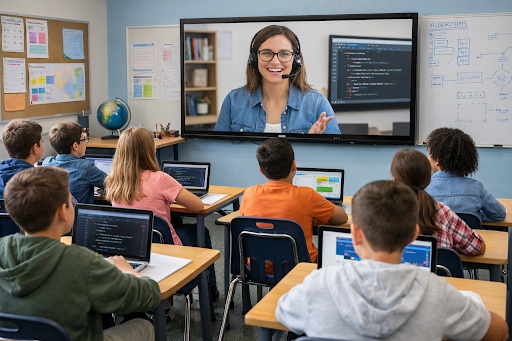
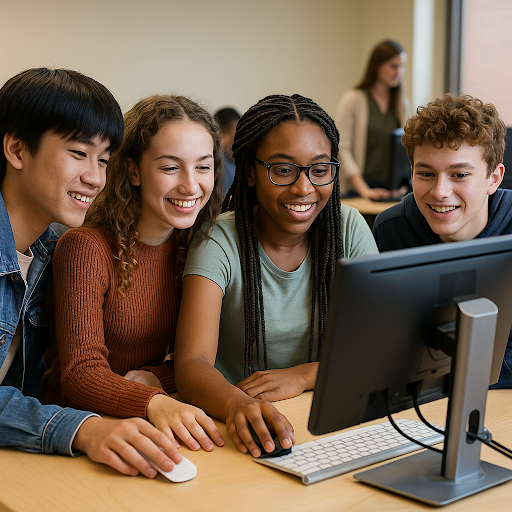
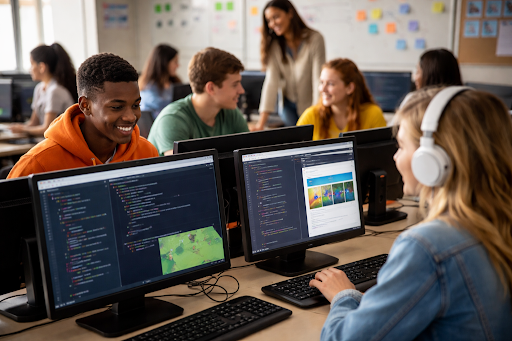
In effective high school coding classrooms, you’ll see students:
- Debugging errors collaboratively
- Testing user inputs
- Designing UI layouts
- Explaining their logic to peers
- Iterating based on feedback
These are not passive learning experiences—they are active skill-building moments.
Project-based coding lessons also allow for differentiation. Students can expand complexity based on readiness, making the experience inclusive for beginners while still challenging advanced learners.
Opening Doors to Multiple Pathways
Not every student who learns to code will become a software engineer—and that’s okay.
Hands-on coding prepares students for:
- Computer science degrees
- IT and networking roles
- Cybersecurity pathways
- AI and data analytics
- Digital entrepreneurship
- Technical certifications
- Workforce development programs
Even students who pursue non-technical fields benefit from computational thinking and digital literacy.
Creating Confidence Through Creation
One of the most transformative outcomes of hands-on coding is identity shift.
When a student builds their first working program, something changes. They begin to see technology as something they can shape—not just something that shapes them.
That confidence carries into college interviews, internships, certifications, and beyond.
The Future Starts in High School
Preparing students for tech careers cannot wait until college. High school is where curiosity meets capability.
By prioritizing hands-on coding lessons that emphasize real-world skills, authentic projects, and career alignment, schools can equip students not just with knowledge—but with opportunity.
At Rex K-12, we are committed to helping high school students move from interest to impact through meaningful, hands-on computer science education.
Because the future workforce isn’t just going to use technology.
They’re going to build it.