
Why Every K–12 Teacher Needs AI Literacy—Even If They Don’t Teach STEM
We’re living in an era where artificial intelligence (AI) is no longer futuristic. It’s foundational. From the music our students stream to the auto-grading tools they use for assignments, AI is already embedded in their daily lives. Yet while AI’s presence in schools continues to grow, many K–12 educators are left without the knowledge or training to address it confidently, especially those outside of STEM fields.
At Rex K–12, we believe AI literacy isn’t just for computer science teachers. It’s for every educator. Whether you are a kindergarten teacher reading storybooks, a middle school art instructor teaching visual composition, or a high school English teacher leading a poetry unit, understanding AI is now an essential part of modern teaching.
This blog explores why all teachers—not just tech-focused ones—need AI literacy, what that really means in practice, and how schools can begin preparing every educator for the AI-powered present and future.
What Is AI Literacy?
AI literacy means being able to:
- Understand what AI is and how it works at a conceptual level
- Recognize how AI affects daily life, work, and society
- Use AI tools responsibly and ethically in learning environments
- Teach students to be critical thinkers and informed users of AI
AI literacy is not about writing complex code or becoming a data scientist. It’s about building foundational awareness and pedagogical readiness, much like we expect educators to understand the basics of internet safety or media literacy.
Why All Teachers Need AI Literacy
1. AI Is Shaping the World Our Students Are Entering
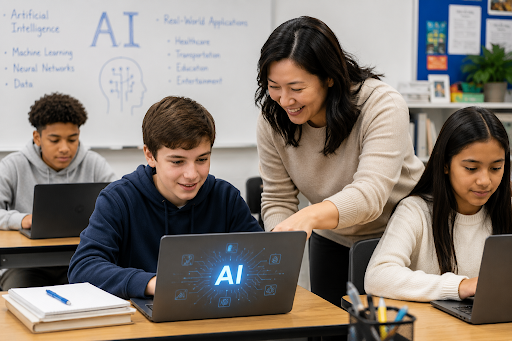
Today’s students will enter a workforce where AI supports medical diagnoses, architectural design, legal research, creative production, and countless other fields. Teachers play a critical role in preparing students not just technically, but ethically and thoughtfully.
Students who understand AI are better prepared to analyze bias in data, challenge stereotypes in AI-generated media, collaborate safely with automated systems, and make informed decisions as digital citizens. Educators, regardless of subject area, help shape this understanding every day.
2. AI Already Touches Every Subject Area
AI is not confined to math or coding classes. It intersects with nearly every discipline:
- English Language Arts: Analyzing AI-generated text, examining authorial voice, and debating the ethics of AI in journalism
- History and Social Studies: Exploring surveillance, automation, digital rights, and their impact on democracy
- Art: Investigating AI-generated imagery, originality, and copyright
- Science: Understanding data modeling and pattern recognition
- Physical Education: Using wearables and data tools to track performance
- World Languages: Discussing translation tools and their cultural limitations
AI is a cross-disciplinary tool, and its social, ethical, and emotional implications require human-centered teaching across all subjects.
3. AI Tools Are Already in Classrooms
Many educators are already using AI, sometimes without realizing it. Common examples include:
- Grammarly and other writing assistants
- Khan Academy’s AI-powered tutoring tools
- ChatGPT for lesson planning or brainstorming
- Google Translate and Google Lens
- AI-generated quizzes and assessments
These tools can save time and support differentiation, but they also raise important questions. Is AI reinforcing bias? Does it promote equity or widen gaps? How is student data being protected?
Without AI literacy, educators cannot confidently answer these questions or guide students in using these tools responsibly.
4. Students Need Guidance, Not Just Access
Students are already asking AI to write essays, generate art, and personalize their digital experiences. Without intentional instruction, they risk becoming passive consumers of AI rather than informed, empowered users.
AI literacy is not just a content expectation. It is a citizenship requirement. Teachers serve as the gatekeepers of digital citizenship and play a vital role in helping students understand how AI works, where it falls short, and how to use it ethically.
What AI Literacy Looks Like for Non-STEM Teachers
AI literacy does not require coding expertise. In practice, it might look like:
- An ELA teacher guiding students in analyzing AI-generated poetry for tone, voice, and coherence
- A history teacher leading discussions about AI, surveillance, and civil rights
- An art teacher teaching students how to ethically remix AI-generated images
- A kindergarten teacher reading a story about robots and discussing what it means for a machine to “learn”
- A school counselor helping students evaluate ethical uses of AI in college or career planning
AI literacy starts with curiosity, reflection, and relevance, not technical mastery.
Challenges Teachers Face—and How to Overcome Them
Many educators want to engage with AI but face real barriers.
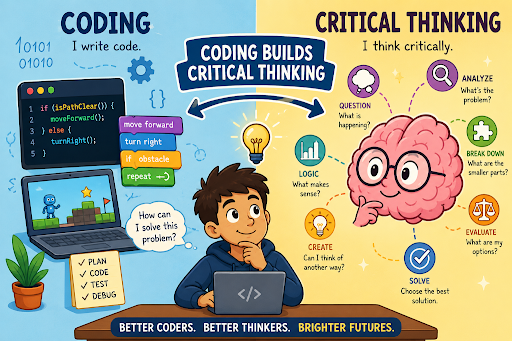
Some feel they are not technical enough. The solution is to begin with conceptual understanding using analogies, stories, and real-world examples. Beginner-friendly tools like Scratch or Google’s Teachable Machine are designed to lower the barrier to entry.
Others worry about time. AI discussions can be embedded into existing units, such as exploring algorithmic bias during a civil rights lesson or comparing AI-generated writing with student work in ELA.
Concerns about misuse are also common. Modeling responsible AI use, setting clear boundaries, and using rubrics that value originality and reflection help establish healthy norms.
Finally, many teachers feel there is no curriculum. Free resources from organizations like Code.org, ISTE, and CSTA provide strong starting points, and Rex K–12 offers modular, cross-curricular AI lessons designed for non-technical educators.
How Schools Can Support AI Literacy for All Teachers
Schools play a crucial role in making AI literacy accessible and sustainable.
Professional development should be offered school-wide, starting with foundational workshops on what AI is and why it matters. Optional learning pathways can support teachers at different comfort levels, from beginners to instructional leaders.
A culture of curiosity helps normalize learning. Schools can host AI exploration weeks, create teacher PLCs focused on AI, and share examples through newsletters or PD days.
Embedding AI across the curriculum requires time and support. Interdisciplinary planning, co-teaching opportunities, and adaptable project templates make this integration more feasible.
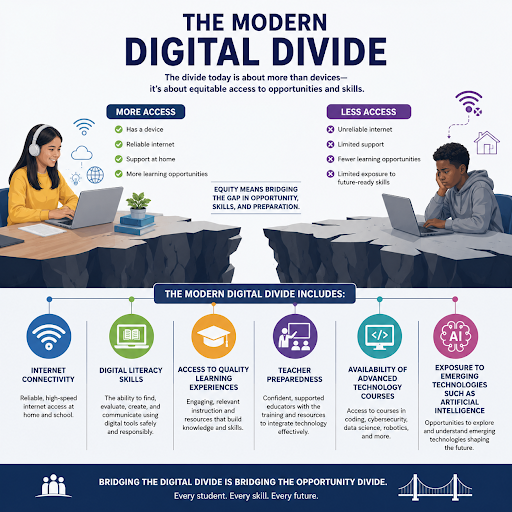
Equity must remain central. Providing low-tech or no-tech options, choosing accessible tools, and supporting rural, underserved, and multilingual educators ensures AI literacy does not become another barrier.
The Future of Teaching Requires AI-Aware Educators
AI is not the future. It is the present. Teachers do not need to become engineers, but they do need to understand, question, and teach about AI.
Just as literacy, numeracy, and digital skills became essential components of education, AI literacy must become part of every teacher’s toolkit. Not because AI will replace teachers, but because teachers will shape the next generation of humans who shape AI.
Takeaway for School Leaders and Teachers
Teachers can begin by starting small. Reading one article, exploring one tool, or reflecting with peers builds momentum.
Instructional coaches can support this work by facilitating professional learning that connects AI directly to pedagogy and classroom practice.
School leaders can make the greatest impact by positioning AI literacy as a staff-wide priority, not a responsibility limited to the technology department.
District leaders can invest in inclusive, ongoing AI training that ensures all educators, regardless of role or background, are prepared for the realities of AI in education.