
Pedagogical Shifts – How AI Teaching Transforms Traditional Instruction
Artificial intelligence (AI) is not just another topic to add to the K–12 curriculum—it’s a transformative force that reshapes how we teach, how students learn, and which skills matter most for future readiness. As AI enters the classroom, it brings more than new content; it demands a fundamental shift in pedagogy.
In this fourth blog in our series on preparing U.S. K–12 teachers to teach AI, we explore how AI education redefines instructional practice. Teaching AI concepts—and thoughtfully using AI-powered tools—requires deeper thinking, ethical engagement, and more inclusive, student-driven learning experiences.
What Do We Mean by a “Pedagogical Shift”?
Pedagogy isn’t simply the act of teaching—it’s how we teach. It reflects our beliefs, strategies, and priorities as educators. When AI enters the picture, we must reconsider:
- What content we teach—and why
- How students engage with knowledge
- What counts as understanding or mastery
- Who holds agency in the learning process
Traditional, lecture-driven instruction falls short when teaching AI. Instead, effective AI education calls for approaches that are:
- Inquiry-based
- Project-oriented
- Interdisciplinary
- Ethical and reflective
- Culturally responsive
- Creative and student-centered
Below, we explore the key pedagogical shifts that support meaningful AI learning.
Shift 1: From Content Delivery to Inquiry-Based Exploration
Old Paradigm: The teacher explains; students memorize.
New Paradigm: Students explore, question, and investigate.
AI is filled with open-ended questions that rarely have simple answers:
- Is AI fair?
- Can machines be creative?
- Should AI be used in schools?
These questions invite inquiry rather than instruction. Students must be encouraged to investigate, form hypotheses, analyze evidence, and revise their thinking through dialogue and reflection.
Example:
Grade 7 students explore the question, “How does facial recognition work, and is it fair to all people?” Students examine real-world case studies, experiment with tools like Teachable Machine, and discuss how bias enters datasets and impacts outcomes.
Shift 2: From Worksheets to Projects with Purpose
Old Paradigm: Worksheets and single-solution problems.
New Paradigm: Authentic projects that demonstrate learning in context.
AI is best learned through doing. Whether students are building a chatbot, analyzing AI-generated images, or designing a prototype, project-based learning emphasizes creativity, problem-solving, and reflection.
Example:
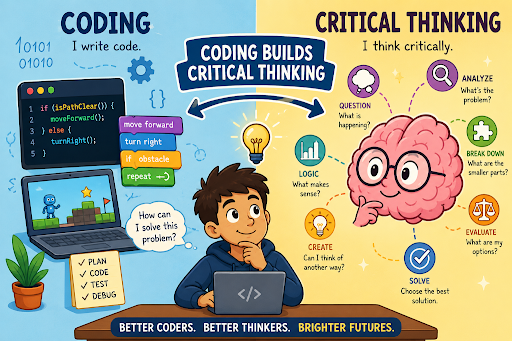
Grade 10 students design a “Smart Library Assistant” using visual AI. They collect image data, train a classifier to recommend books, and reflect on accuracy, limitations, and bias. The emphasis isn’t on coding—it’s on thinking critically about how AI systems work.
Shift 3: From Siloed Subjects to Interdisciplinary Integration
Old Paradigm: AI is limited to a computer science elective.
New Paradigm: AI connects across content areas.
Because AI affects nearly every field, it naturally lends itself to interdisciplinary learning. Collaboration across subjects increases relevance and supports systems thinking.
Example:
A cross-curricular unit titled “AI and Identity” includes:
- ELA: Analyzing AI-generated poetry
- History: Examining surveillance and civil liberties
- Art: Creating portraits inspired by generative AI
- Technology: Building a basic facial recognition model
Students learn that AI isn’t just technical—it’s deeply human.
Shift 4: From Right Answers to Ethical Thinking
Old Paradigm: Speed, accuracy, and conformity are rewarded.
New Paradigm: Reasoning, ethics, and empathy are valued.
AI introduces complex ethical questions:
- Who decides what data is “normal”?
- Can machines replace human judgment?
- What happens when AI is wrong?
Teachers must create space for discussion, disagreement, and moral reasoning.
Example:
Grade 8 students study AI use in criminal justice by analyzing predictive policing case studies, participating in structured debates, and co-authoring policy recommendations. Learning happens through dialogue—not dictation.
Shift 5: From Passive Tech Use to Active Creation with AI
Old Paradigm: Technology is used mainly for consumption or presentation.
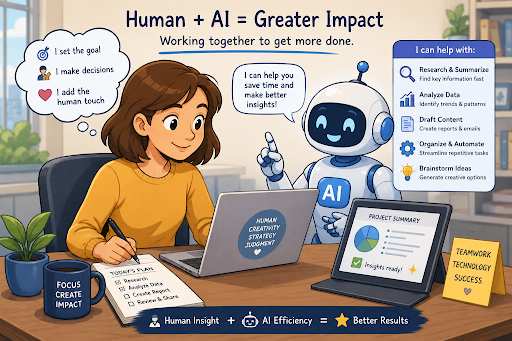
New Paradigm: AI is a tool for creation, experimentation, and invention.
Students should move from:
- Watching to experimenting
- Consuming to questioning
- Clicking to building
Even no-code and low-code tools allow students to actively engage with AI systems.
Example:
Elementary students use Scratch with machine learning extensions to build a game where a character responds to emotions. They train a simple model, program responses, and share their projects in a class showcase—building confidence and ownership along the way.
Shift 6: From One-Size-Fits-All to Culturally Responsive AI Education
Old Paradigm: Curriculum is neutral and disconnected from identity.
New Paradigm: AI learning is inclusive, relevant, and affirming.
AI systems can reinforce existing inequities if left unexamined. Culturally responsive AI education asks students to consider:
- Whose data is represented
- Whose voices are missing
- How AI impacts their own communities
Example:
Middle school students explore why voice assistants struggle with certain accents, how translation tools miss cultural nuance, and how training more inclusive data can improve outcomes. Students see themselves not just as users of AI—but as shapers of it.
Practical Ways Teachers Can Start Making the Shift
You don’t need to redesign everything at once. Small, intentional changes can make a big difference:
- Use “What if…?” questions to spark inquiry
- Replace one worksheet with a short AI-based mini-project
- Co-plan a unit with a colleague in another subject area
- Add reflection or journaling to AI activities
- Let students remix AI-generated art or text
- Invite students to include their language, culture, or experiences in training data
These shifts deepen engagement and help students build meaningful relationships with AI concepts.
How School Leaders Can Support Pedagogical Change
School and district leaders play a critical role by:
- Offering PD that blends AI content, pedagogy, and ethics
- Protecting time for interdisciplinary collaboration
- Encouraging experimentation—even when outcomes aren’t perfect
- Investing in inclusive, culturally responsive resources
- Celebrating teachers who pilot innovative practices
Final Thoughts: AI as a Catalyst for Reimagining Learning
Artificial intelligence isn’t just a new skill—it’s a new lens for rethinking the purpose of school in an AI-driven world. As educators, our responsibility is not only to teach AI, but to model thoughtful, ethical, and human-centered learning.
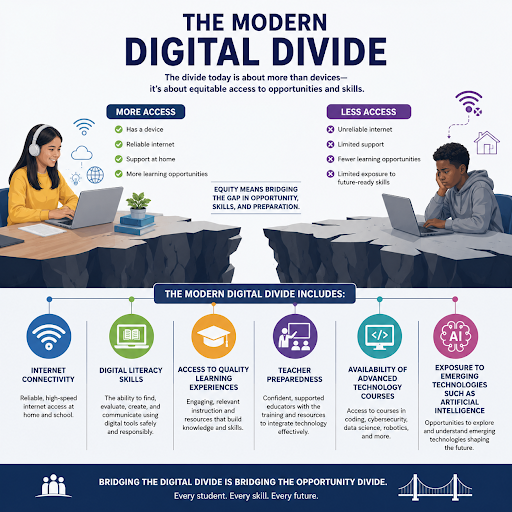
AI can widen gaps—or build bridges.
It can disempower—or inspire.
By embracing pedagogical shifts grounded in equity, inquiry, and creativity, we empower teachers to become architects of possibility—and students to become confident creators of the future.