Top Benefits of Introducing AI and Cybersecurity Education in K-12 Schools
As artificial intelligence (AI) and cybersecurity continue to shape every industry, the question is no longer if students should learn about them—but when. From healthcare and agriculture to business, defense, and entertainment, AI and cybersecurity are embedded in the systems that power our daily lives.
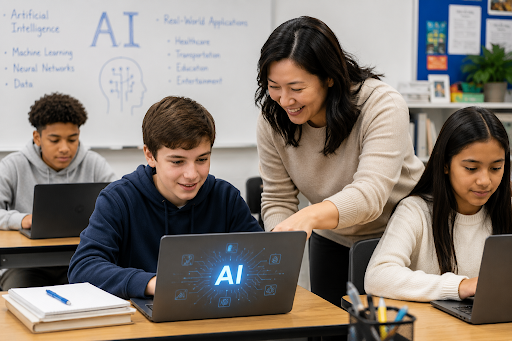
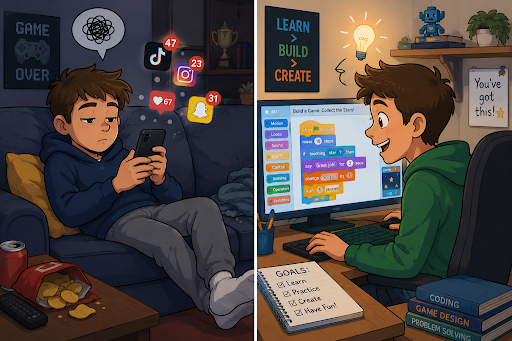
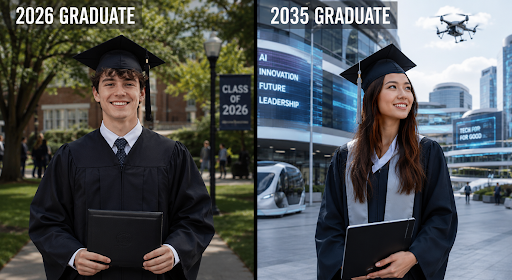
Introducing AI and cybersecurity education in K–12 schools ensures students are not just passive consumers of technology—but informed, ethical, and capable creators.
Below are the top benefits of integrating AI and cybersecurity into K–12 education.
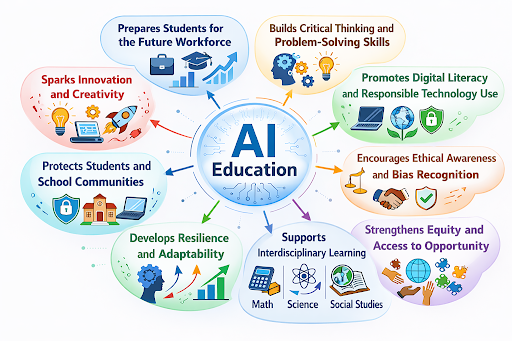
1. Prepares Students for the Future Workforce
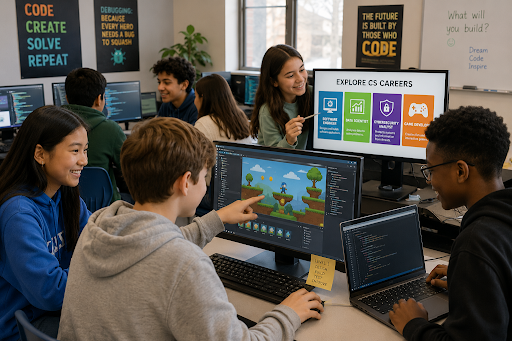
AI and cybersecurity careers are among the fastest-growing and highest-paying fields in today’s job market. Roles such as AI engineer, data analyst, cybersecurity specialist, ethical hacker, and cloud architect are in high demand—and the demand continues to grow.
When students gain exposure early:
- They understand emerging career pathways.
- They build foundational skills before college.
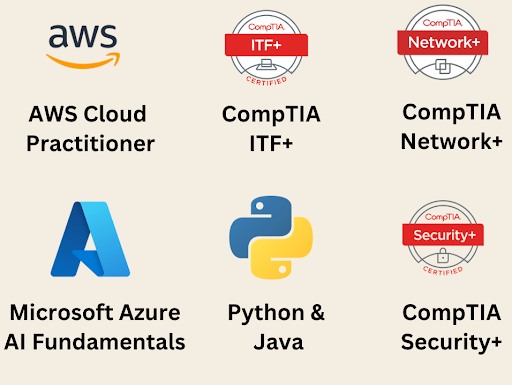
- They can pursue industry certifications in high school.
- They develop confidence in technical problem-solving.
Early exposure reduces intimidation and increases access—especially for students who might not otherwise consider tech careers.
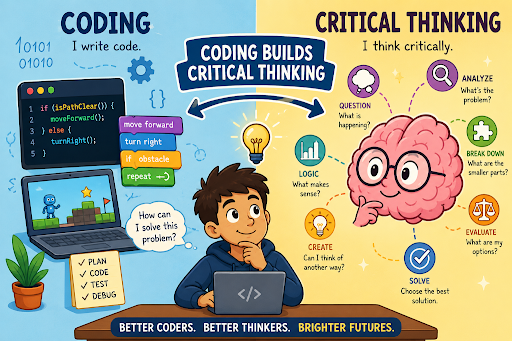
2. Builds Critical Thinking and Problem-Solving Skills
AI education teaches students to:
- Analyze data
- Identify patterns
- Evaluate outputs
- Question bias
- Design solutions
Cybersecurity education teaches students to:
- Think defensively
- Anticipate risks
- Evaluate vulnerabilities
- Protect digital systems
Both disciplines require higher-order thinking. Students are not memorizing information—they are analyzing, designing, testing, and refining. These cognitive skills transfer across subjects and strengthen academic performance overall.
3. Promotes Digital Literacy and Responsible Technology Use
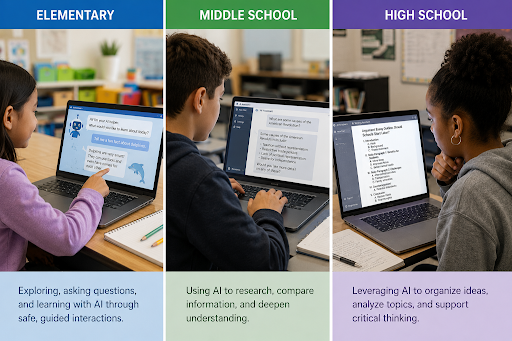
Today’s students interact with AI daily—through recommendation algorithms, chatbots, search engines, and social media platforms. However, most do not understand how these systems work or the risks involved.
Teaching AI and cybersecurity in K–12 schools:
- Improves digital citizenship
- Raises awareness of privacy and data protection
- Helps students recognize misinformation
- Encourages ethical technology use
Students learn not only how to use technology—but how to use it responsibly and safely.
4. Encourages Ethical Awareness and Bias Recognition
AI systems can reflect bias in data, design, and deployment. Teaching students about algorithmic bias, data ethics, and responsible AI empowers them to question outputs instead of accepting them blindly.
Cybersecurity education also fosters ethical thinking:
- What is ethical hacking?
- Why is consent essential?
- What are the legal implications of data breaches?
By introducing these topics early, schools cultivate students who are not only skilled—but principled.
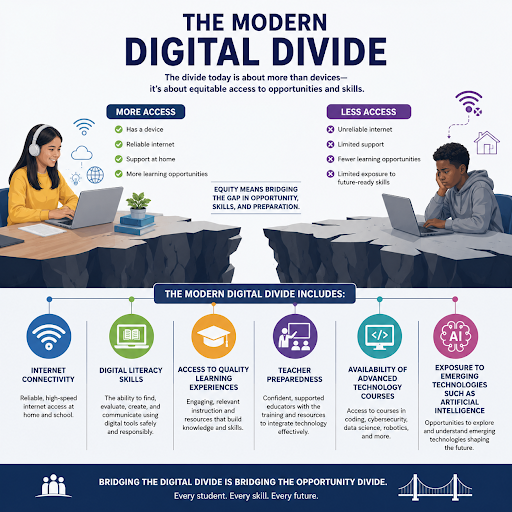
5. Strengthens Equity and Access to Opportunity
Historically, access to advanced technology education has not been evenly distributed. Introducing AI and cybersecurity education in K–12 schools levels the playing field.
When schools offer structured AI and cybersecurity pathways:
- Students from all backgrounds gain exposure.
- Underrepresented populations see themselves in tech roles.
- Schools reduce the digital skills gap.
- Communities build long-term economic resilience.
Access at the K–12 level helps break cycles of limited opportunity and opens doors to high-growth careers.
6. Supports Interdisciplinary Learning
AI and cybersecurity are not isolated subjects—they connect to:
- Mathematics (algorithms, statistics)
- Science (machine learning models, data analysis)
- Social studies (ethics, policy, governance)
- Language arts (prompt engineering, communication)
- Business (risk management, innovation)
These disciplines strengthen cross-curricular collaboration and demonstrate real-world application. Students see how academic subjects connect beyond the classroom.
7. Develops Resilience and Adaptability
Technology changes rapidly. Teaching AI and cybersecurity helps students become adaptable learners who:
- Embrace change
- Learn new tools quickly
- Stay curious
- Think strategically
Instead of fearing technological shifts, students become equipped to navigate and lead them.
8. Protects Students and School Communities
Cybersecurity education has immediate practical benefits. Students learn:
- How to create strong passwords
- How phishing attacks work
- How to protect personal information
- How to respond to suspicious activity
In an age where schools face increasing cyber threats, educating students becomes part of the defense strategy. Informed users strengthen overall digital safety.
9. Sparks Innovation and Creativity
AI tools empower students to:
- Build chatbots
- Design games
- Create AI-assisted art
- Analyze real-world data
- Develop automated solutions
Cybersecurity challenges encourage creative problem-solving and strategic thinking. Students move from consumers of apps to developers of solutions.
Final Thoughts
Introducing AI and cybersecurity education in K–12 schools is not about replacing traditional subjects. It is about enhancing them and preparing students for a future that is already here.
Students deserve:
- Access to emerging technologies
- Ethical frameworks for using them
- Career-aligned pathways
- Real-world problem-solving opportunities
When schools integrate AI and cybersecurity thoughtfully, they do more than teach technology. They empower students with the knowledge, skills, and confidence to thrive in a digital world.
If your school or district is exploring ways to introduce AI and cybersecurity education, now is the time to build a pathway that prepares students not just for the next test—but for the next decade.