The Importance of Keyboarding in the AI Age
In a world filled with artificial intelligence, automation, and voice-to-text tools, it might be tempting to assume that traditional keyboarding skills are becoming less relevant. After all, students can speak to devices, tap on tablets, or use predictive text to complete sentences.
But in reality, the AI age has made strong keyboarding skills more important than ever.
Keyboarding Is the Gateway to Digital Fluency
Before students can code, prompt AI tools, draft research papers, collaborate in shared documents, or complete online assessments, they must first be able to efficiently and accurately input text.
Keyboarding is not just about typing words. It is about:
- Translating thoughts into text at the speed of thinking
- Reducing cognitive load so students can focus on ideas instead of keys
- Communicating clearly in digital environments
- Working independently without constant correction
When students struggle to type, their mental energy shifts away from creativity, problem-solving, and analysis. In the AI age, where higher-order thinking matters more than ever, we cannot afford that barrier.
AI Does Not Replace Input Skills
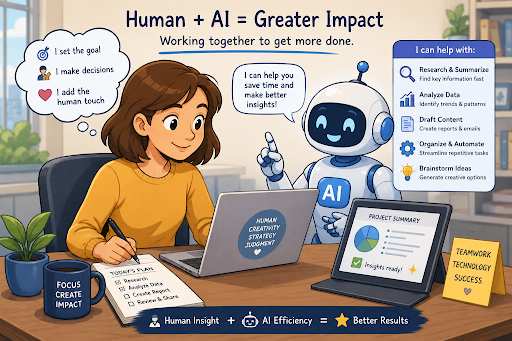
Artificial intelligence tools still require human direction. Whether students are writing prompts for generative AI, coding in Python, drafting cybersecurity documentation, or collaborating in a shared workspace, they must communicate clearly through text.
AI amplifies ideas. It does not generate meaningful direction without thoughtful input.
Strong keyboarding skills allow students to:
- Craft detailed AI prompts
- Revise and refine outputs quickly
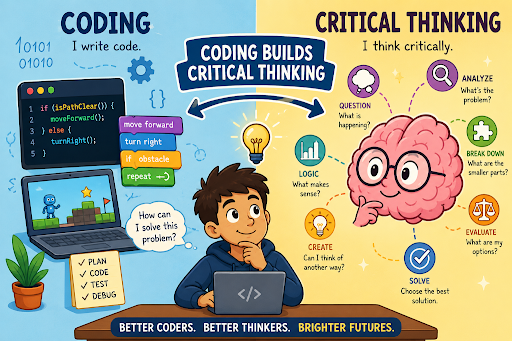
- Debug code efficiently
- Participate in online discussions
- Complete timed digital assessments with confidence
In other words, AI increases the value of strong typing skills rather than eliminating them.
Speed and Accuracy Build Confidence
Keyboarding is foundational in the same way handwriting once was. When students can type fluidly without looking at the keyboard, they gain:
- Greater academic confidence
- Faster completion of assignments
- Improved writing fluency
- Stronger performance on online exams
- Increased engagement in digital coursework
Confidence matters. Students who feel competent navigating digital tools are more likely to explore advanced topics like AI, cybersecurity, coding, and web development.
Equity in the Digital Era
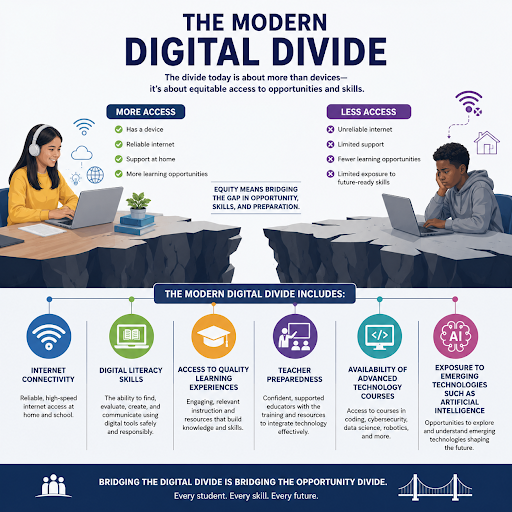
Access to devices is only part of digital equity. True equity includes the skills needed to use technology effectively.
Students who have never been formally taught keyboarding often develop inefficient habits. They may hunt-and-peck, rely on two fingers, or avoid complex written responses because typing feels frustrating.
In an AI-driven workforce, those inefficiencies compound over time.
Teaching keyboarding intentionally ensures that all students, regardless of background, have the foundational skill needed to participate fully in:
- Online learning environments
- Certification-aligned courses
- Career and technical education pathways
- Remote and hybrid workplaces
Keyboarding is not an outdated skill. It is a digital access skill.
Keyboarding Supports Future Careers
From entry-level roles to advanced technical careers, nearly every modern profession requires frequent and efficient typing:
- Software development
- Data analysis
- Digital marketing
- Healthcare documentation
- Business communication
- Cybersecurity reporting
- Project management
Even AI engineers spend a significant portion of their time typing prompts, documentation, and code.
Students cannot fully prepare for future careers without mastering the tool they use to communicate with technology.
Building Strong Foundations Early
Keyboarding instruction is most effective when introduced early and reinforced consistently. Proper technique, posture, and finger placement matter. Like any skill, habits form quickly and are harder to correct later.
By building structured keyboarding practice into elementary and middle school programs, schools help students:
- Develop muscle memory
- Increase typing speed over time
- Improve accuracy
- Strengthen written communication skills
These gains translate directly into stronger academic performance across subjects.
The AI Age Requires Strong Foundations
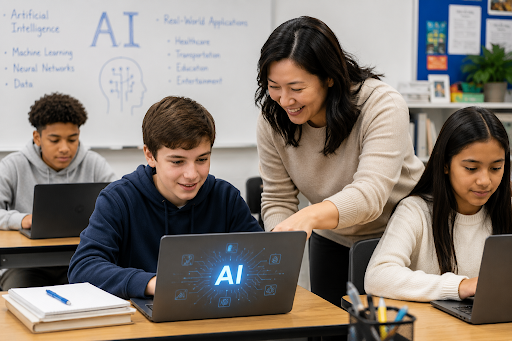
As schools expand AI education, coding courses, cybersecurity pathways, and digital certifications, foundational skills become even more critical.
We cannot build advanced digital literacy on a shaky base.
The AI age demands:
- Critical thinking
- Ethical awareness
- Technical skill
- Clear communication
Keyboarding supports all of them.
Voice tools and automation may continue to evolve, but thoughtful human input will always drive meaningful outcomes. And thoughtful input still requires efficient, accurate typing.
In the rush to adopt the newest technologies, we must not overlook the fundamentals.
Keyboarding is not a relic of the past. It is a core skill for the future.