Bridging the Rural Access Gap in Tech Education
In today’s digital economy, access to technology education is no longer optional. It is foundational. Yet across the United States and globally, students in rural communities continue to face a significant gap in access to high-quality computer science, AI, and technical learning opportunities. Bridging this divide is not just an educational priority. It is an economic and societal necessity.
Understanding the Rural Tech Education Gap
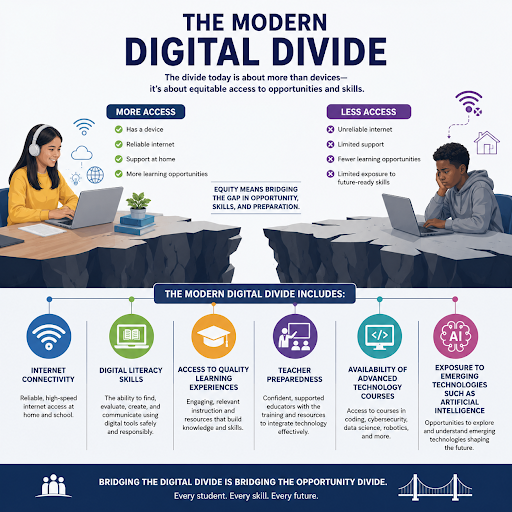
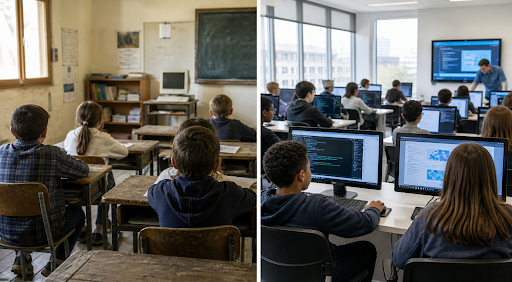
Rural schools often operate with limited resources, smaller staff, and fewer specialized teachers. While urban and suburban districts may offer robust pathways in coding, cybersecurity, and artificial intelligence, rural students are frequently left with minimal exposure to these critical fields.
Several key barriers contribute to this gap:
- Limited access to qualified instructors
Recruiting and retaining computer science teachers is a nationwide challenge, but it is especially pronounced in rural areas. - Infrastructure challenges
Reliable broadband access and up-to-date devices are still inconsistent in many communities. - Budget constraints
Smaller districts often lack the funding to implement or sustain comprehensive tech programs. - Lack of awareness and exposure
Students may not fully understand the opportunities available in tech-driven careers simply because they have not been exposed to them.
The result is a widening divide where geography plays an outsized role in determining a student’s future opportunities.
Why This Gap Matters
The implications go far beyond the classroom. As industries increasingly rely on technology, students without foundational tech skills are at risk of being excluded from high-growth, high-paying careers.
According to labor trends, roles in software development, data science, cybersecurity, and cloud computing continue to expand rapidly. Without intervention, rural communities risk being left behind in workforce development, economic growth, and innovation.
Bridging this gap ensures:
- Greater economic mobility for students
- Stronger local economies
- A more diverse and inclusive tech workforce
- Opportunities for students to remain in and contribute to their communities
Practical Solutions to Close the Gap
The good news is that solving this challenge does not require reinventing the wheel. It requires intentional, scalable strategies that meet rural schools where they are.
1. Leveraging Virtual Instruction
Virtual learning has transformed what is possible for rural education. Schools no longer need to rely solely on local talent to offer specialized courses.
By partnering with organizations that provide live virtual instructors or asynchronous support, rural districts can give students access to courses like:
- AI and Machine Learning basics
- Cybersecurity pathways
- Game development and coding
- Cloud computing certifications
This model removes geographic limitations while maintaining high-quality instruction.
2. Empowering Existing Teachers
Not every school can hire a dedicated computer science teacher, but every school has educators who can be empowered.
Providing curriculum that includes:
- Detailed teacher guides
- Instructional videos
- Built-in scaffolding and differentiation
- Ongoing support systems
allows teachers from any background to confidently facilitate tech courses. This approach transforms the barrier of “not having a specialist” into an opportunity for professional growth.
3. Expanding Access Through Self-Paced Learning
Self-paced, platform-based learning is another powerful tool for rural communities. These programs allow students to learn anytime, anywhere, regardless of scheduling or staffing limitations.
When designed effectively, self-paced courses can:
- Reinforce classroom instruction
- Provide enrichment opportunities
- Support independent learners
- Extend access beyond the school day
This flexibility is especially valuable for students balancing transportation challenges, extracurricular responsibilities, or limited course offerings.
4. Strengthening Infrastructure and Partnerships
Closing the rural access gap also requires collaboration between schools, governments, and private organizations.
Key strategies include:
- Expanding broadband access initiatives
- Leveraging grants and funding opportunities
- Partnering with edtech providers and workforce organizations
- Building relationships with local businesses and industries
These partnerships create a support system that extends beyond the classroom and into the community.
5. Creating Clear Career Pathways
Exposure alone is not enough. Students need to see how their learning connects to real opportunities.
Schools can bridge this gap by:
- Offering certification-aligned courses (e.g., cloud computing, IT fundamentals)
- Hosting career exploration events
- Providing mentorship opportunities
- Showcasing real-world applications of tech skills
When students understand the “why,” engagement and motivation increase dramatically.
A Shift in Mindset
One of the most important steps in bridging the rural tech gap is shifting how we think about access. It is no longer about whether a school can build a full, in-house program. It is about how schools can strategically leverage available tools, partnerships, and resources to create meaningful opportunities for students.
Technology has made it possible for any student, anywhere, to access high-quality learning. The challenge now is ensuring that access becomes the standard, not the exception.
Looking Ahead
The future of education is not confined by geography. With the right strategies in place, rural schools can offer the same, if not better, opportunities as their urban counterparts.
Bridging the rural access gap in tech education is about equity, opportunity, and preparing every student for a world that is increasingly driven by technology.
When we invest in these solutions, we are not just closing a gap. We are opening doors for millions of students to learn, grow, and lead in the digital age.