Building Digital Confidence in Early Learners
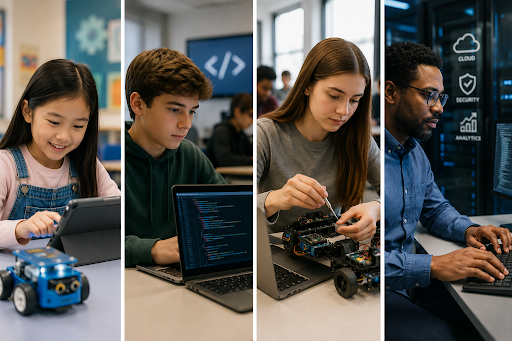
Technology is no longer something students encounter only in high school computer labs or specialized electives. Today’s learners are growing up in a world shaped by digital tools from the very beginning. For schools and families, this creates an important opportunity: helping young students build digital confidence early.
Digital confidence is not about turning every elementary student into a programmer overnight. It is about helping children feel comfortable exploring technology, solving problems, asking questions, and using digital tools safely and creatively. When students develop confidence early, they are more likely to engage with future learning opportunities in computer science, artificial intelligence, cybersecurity, and other technology-related fields.
What Is Digital Confidence?
Digital confidence is a student’s ability to approach technology with curiosity instead of fear. Confident learners are willing to try, experiment, make mistakes, and continue learning even when something feels challenging.
For early learners, digital confidence can look like:
- Navigating a simple digital platform independently
- Understanding basic online safety expectations
- Creating simple animations, stories, or games
- Using technology to express ideas creatively
- Solving small technology-based challenges
- Asking thoughtful questions about how technology works
These experiences may seem simple, but they build the foundation for future digital literacy and technical skills.
Why Early Exposure Matters
Young students are naturally curious. Elementary classrooms are often filled with creativity, exploration, and hands-on learning. Technology can support all of those things when introduced in age-appropriate ways.
Early exposure helps students:
- Develop comfort with digital tools before technology becomes intimidating
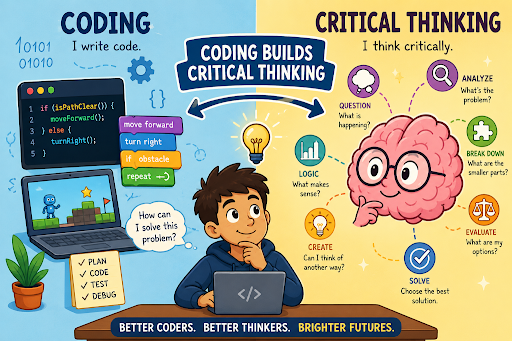
- Build problem-solving and critical thinking skills
- Strengthen creativity through digital projects
- Learn persistence when troubleshooting challenges
- Begin understanding how technology impacts their daily lives
Research and classroom experience consistently show that students who feel successful early are more likely to continue engaging in technology-related learning later on.
Confidence Before Complexity
One of the biggest misconceptions about elementary computer science education is that students must immediately learn advanced coding concepts. In reality, confidence should come before complexity.
Early learning environments should prioritize:
- Exploration over perfection
- Creativity over memorization
- Encouragement over pressure
- Guided discovery over rigid instruction
This is why many elementary computer science programs start with activities like:
- Drag-and-drop block coding
- Digital storytelling
- Animation projects
- Interactive games
- Logic and sequencing activities
These experiences allow students to build familiarity while still having fun.
The Importance of Safe Digital Spaces
Building digital confidence also means ensuring students feel safe while learning online.
For younger students, safe digital learning environments should include:
- Age-appropriate content
- Secure platforms
- Limited distractions
- Clear expectations for digital behavior
- Guided instruction and support
When students feel safe and supported, they are more willing to participate, explore, and take healthy learning risks.
Schools and families also play an important role in teaching foundational digital citizenship skills such as:
- Respectful online communication
- Protecting personal information
- Understanding screen balance
- Identifying trustworthy information
These lessons are just as important as technical skills themselves.
Encouraging Creativity Through Technology
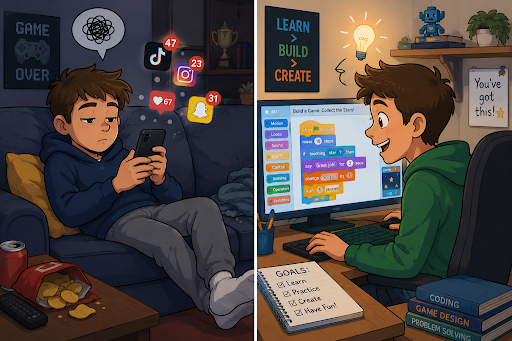
Technology should not only be about consumption. Early learners benefit most when they become creators.
Students can:
- Design games
- Build animations
- Create digital art
- Record presentations
- Solve challenges collaboratively
- Experiment with beginner coding projects
Creative technology experiences help students see themselves as capable builders and innovators, not just users of devices.
This mindset shift can have a lasting impact on student confidence and future career exploration.
Supporting Teachers and Families
Building digital confidence is most successful when schools and families work together.
Teachers do not need to be computer science experts to support early learners. Strong curriculum, guided teacher resources, and accessible platforms can make technology instruction approachable for educators of all backgrounds.
Families can support digital confidence at home by:
- Encouraging curiosity
- Celebrating effort and persistence
- Asking students about their projects
- Exploring technology together
- Maintaining healthy conversations about online safety
Even small moments of encouragement can help students develop a positive relationship with technology.
Preparing Students for the Future
The future workforce will continue to rely heavily on technology, digital communication, and problem-solving skills. Students who build digital confidence early are better prepared to adapt as technology evolves.
More importantly, they begin to understand that technology is something they can actively shape and create, not just consume.
By introducing age-appropriate digital learning opportunities in elementary education, schools can help students develop confidence, creativity, and curiosity that will benefit them for years to come.
Digital confidence starts small. A student dragging their first coding block, creating their first animation, or solving their first digital challenge may seem like a simple moment, but those early experiences often become the foundation for lifelong learning and innovation.