Are Industry Certifications Worth It in High School?
For decades, the traditional pathway for high school students seemed straightforward: graduate, attend college, earn a degree, and begin a career. While higher education remains a valuable option for many students, today’s workforce demands have created a much broader landscape of opportunities. Increasingly, employers are looking for candidates who can demonstrate practical skills alongside academic achievement.
This shift has led many schools to ask an important question:
Are industry certifications worth pursuing in high school?
The short answer is yes. When thoughtfully selected and aligned with student interests and career pathways, industry certifications can provide significant benefits that extend far beyond a credential on a resume.
What Are Industry Certifications?
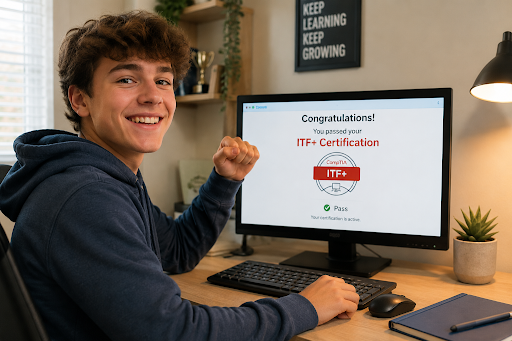
Industry certifications are credentials that validate a person’s knowledge and skills in a specific field. Unlike traditional academic courses, certifications are typically designed and recognized by industry leaders and employers.
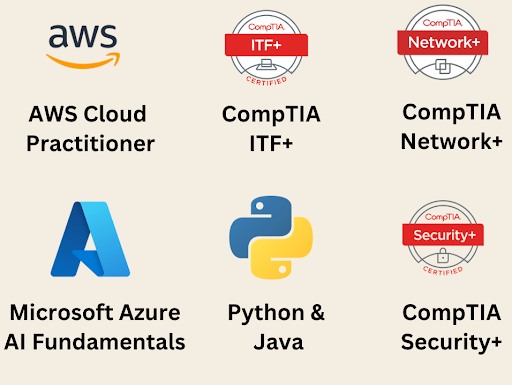
Examples include certifications in:
- Information Technology
- Cybersecurity
- Cloud Computing
- Computer Programming
- Data Analytics
- Artificial Intelligence
- Microsoft Applications
- Networking
- Web Development
Many of these certifications are recognized nationwide and, in some cases, internationally.
Students Gain Real Workforce Skills
One of the biggest advantages of industry certifications is that they focus on practical, applicable skills.
Students preparing for certification exams aren’t simply memorizing information for a test. They are learning how to use industry-standard tools, solve authentic problems, and understand concepts they may encounter in future careers.
For example, a student earning a cloud computing certification learns more than vocabulary. They gain exposure to the technologies powering modern businesses, websites, applications, and digital services around the world.
These experiences help students connect classroom learning to real-world applications.
Certifications Help Students Explore Careers Earlier
Many students graduate high school without a clear understanding of the careers available to them.
Industry certifications offer an opportunity to explore potential career fields before investing years and thousands of dollars into postsecondary education.
A student who completes a cybersecurity certification may discover a passion for digital security. Another who earns a cloud computing certification may realize they enjoy working with emerging technologies.
Conversely, students may learn that a particular field is not a good fit, which can be just as valuable.
Early exposure helps students make more informed decisions about college majors, technical programs, apprenticeships, and career pathways.
They Strengthen College and Scholarship Applications
College admissions officers increasingly look for students who demonstrate initiative, commitment, and career readiness.
Industry certifications show that a student has gone beyond minimum graduation requirements to develop specialized skills.
These credentials can help students stand out by demonstrating:
- Technical proficiency
- Goal-setting and persistence
- Career exploration
- Independent learning
- Workforce readiness
For competitive scholarship programs, certifications can also provide evidence of a student’s dedication to a particular field of study.
Employers Value Demonstrated Skills
In today’s hiring environment, employers often want evidence that applicants can perform specific tasks, not just that they completed a course.
Industry certifications provide third-party validation of a student’s knowledge and abilities.
While a certification alone may not guarantee employment, it can help students:
- Differentiate themselves from other applicants
- Qualify for internships
- Access entry-level opportunities
- Demonstrate readiness for workplace training programs
For students entering the workforce immediately after graduation, certifications can serve as a valuable first step toward building professional credibility.
Certifications Support Career and College Readiness Goals
Many states and school accountability systems now emphasize college, career, and military readiness indicators.
Industry certifications often align directly with these goals by helping schools demonstrate measurable student outcomes related to workforce preparation.
At the same time, certifications provide students with tangible achievements they can carry with them after graduation.
Unlike a course grade that remains on a transcript, certifications often stay with students as portable credentials that can be referenced on resumes, applications, and professional networking profiles.
Not All Certifications Are Created Equal
While certifications offer tremendous value, schools should be strategic in selecting programs.
The most effective certifications are:
- Recognized by industry employers
- Aligned to workforce demand
- Appropriate for the student’s age and experience level
- Connected to a broader learning pathway
- Supported by high-quality instruction and hands-on practice
A certification should represent meaningful learning, not simply test preparation.
When paired with strong curriculum, projects, and authentic experiences, certifications become powerful tools for student growth.
The Bottom Line
Industry certifications are not a replacement for traditional education. Instead, they complement it by helping students bridge the gap between classroom learning and real-world opportunities.
For many students, certifications provide confidence, direction, and tangible proof of their abilities. They encourage career exploration, strengthen postsecondary applications, and help students develop skills that employers value.
In a world where technology continues to shape nearly every industry, providing students with opportunities to earn meaningful credentials can be an investment that pays dividends long after graduation day.
The question is no longer whether students should be exposed to career-focused learning experiences. The question is whether schools can afford to wait to provide them.
As workforce demands continue to evolve, industry certifications offer one practical way to help students graduate not only with knowledge, but with evidence that they are ready to apply it.