AI Fluency vs. AI Exposure: What Schools Get Wrong
Artificial intelligence is everywhere in education right now.
Districts are hosting AI professional development days. Teachers are experimenting with generative tools. Students are using AI to brainstorm, summarize, and study. Policies are being drafted. Committees are being formed.
But amid all this activity, a critical question often goes unasked: Are we building AI fluency — or are we simply providing AI exposure?
The difference matters. And right now, many schools are confusing the two.
What Is AI Exposure?
AI exposure is surface-level interaction with AI tools.
It looks like:
- Allowing students to use generative AI for assignments
- Demonstrating a chatbot during class
- Hosting a one-day AI assembly
- Sharing a few AI safety slides
- Encouraging teachers to “try out” AI tools
Exposure introduces students to AI’s existence. It may increase comfort and curiosity. But exposure alone does not build understanding.
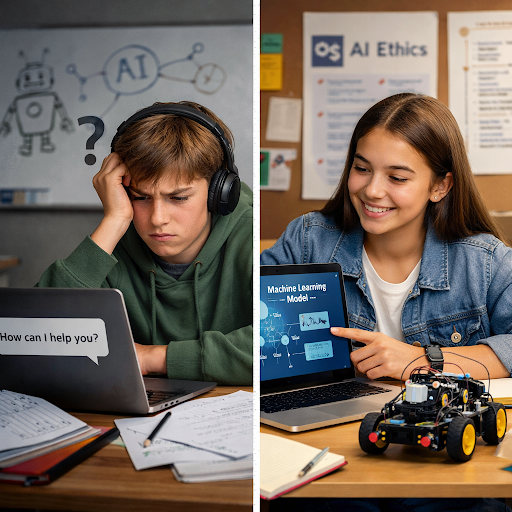
A student who has used AI is not necessarily a student who understands AI.
Exposure answers the question: “Have you seen this before?”
It does not answer: “Do you understand how it works, where it fails, or how to use it responsibly?”
What Is AI Fluency?
AI fluency is deeper.
AI fluency means students can:
- Explain, at a developmentally appropriate level, how AI systems are trained
- Identify bias in AI outputs
- Recognize hallucinations and inaccuracies
- Use AI strategically, not passively
- Evaluate ethical implications
- Understand data privacy risks
- Connect AI tools to real-world applications
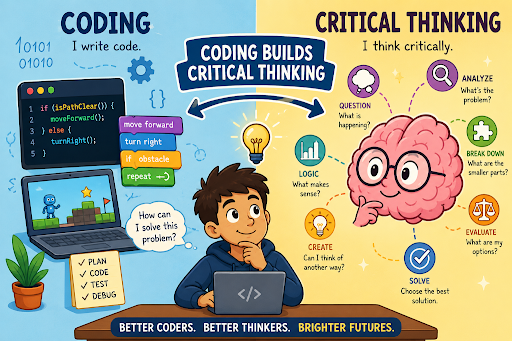
AI fluency builds critical thinking, not just tool familiarity.
It answers the question: “Can you think with and about AI?”
Just as literacy is more than recognizing letters, AI fluency is more than opening a chatbot.
The Calculator Mistake
When calculators entered classrooms, schools eventually realized that simply allowing students to use calculators did not eliminate the need to teach math concepts.
Students still had to understand:
- Number sense
- Logical reasoning
- Problem-solving processes
Similarly, allowing AI use without teaching AI concepts creates dependency without comprehension.
If students can generate answers but cannot evaluate them, they are not fluent. They are reliant. And reliance is not readiness.
Why Exposure Feels Like Enough
AI exposure is easier to implement.
It requires:
- No major curriculum shifts
- No scope and sequence redesign
- No deep teacher training
- No assessment restructuring
Fluency, on the other hand, requires intentional curriculum design.
It requires:
- Age-appropriate AI instruction beginning in elementary grades
- Ethical discussions in middle school
- Deeper technical exploration in high school
- Assessment models that prioritize thinking over output
- Clear policies grounded in pedagogy
Exposure is a moment. Fluency is a system.
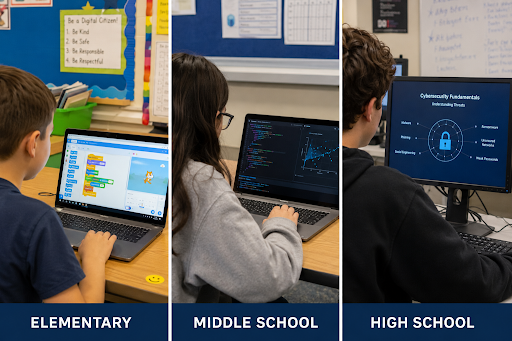
What Fluency Looks Like Across Grade Levels
AI fluency does not mean teaching advanced machine learning in second grade. It means building understanding progressively.
Elementary School
- Understanding that AI learns from data
- Recognizing that AI can make mistakes
- Discussing fairness and bias in simple terms
- Learning digital responsibility
Middle School
- Exploring how training data affects outputs
- Identifying hallucinations
- Discussing algorithmic bias
- Using AI tools strategically for research and creativity
High School
- Examining how large language models function
- Evaluating ethical case studies
- Exploring AI in cybersecurity and workforce contexts
- Building or simulating simple AI systems
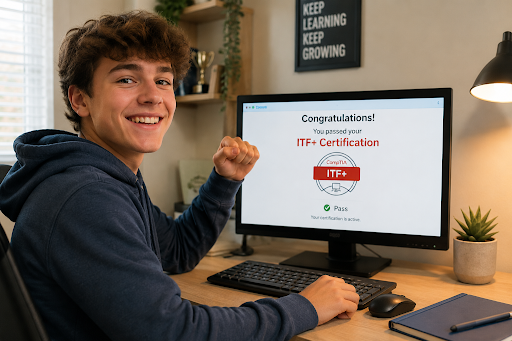
- Connecting AI to certification and career pathways
Fluency grows over time. It is scaffolded, not spontaneous.
The Risk of Getting It Wrong
If schools focus only on exposure:
- Students may overtrust AI outputs
- Academic integrity issues increase
- Critical thinking skills weaken
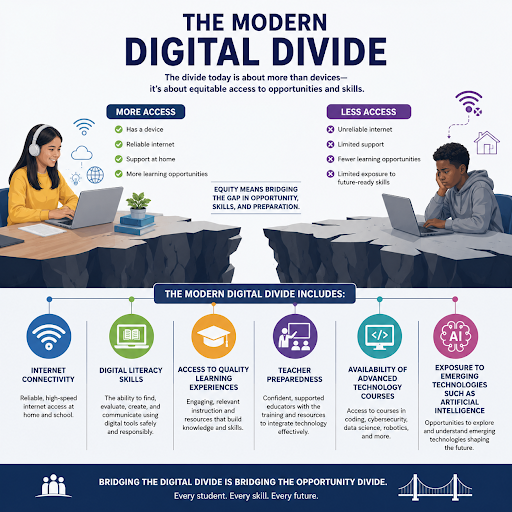
- Equity gaps widen between students who understand AI and those who do not
- Graduates enter the workforce as AI consumers, not AI thinkers
AI is not a temporary trend. It is reshaping industries, hiring practices, and daily workflows.
Surface familiarity will not prepare students for that reality.
Moving From Exposure to Fluency
To build true AI fluency, schools must:
- Integrate AI into a structured K–12 computer science pathway
- Align AI instruction with ethical, civic, and digital literacy standards
- Train teachers beyond tool usage into conceptual understanding
- Redesign assessments to emphasize reasoning
- Provide equitable access to high-quality AI curriculum
AI education must move from experimentation to intentional design. Fluency is not accidental.
The Bigger Picture
AI fluency is not about producing programmers only. It is about producing informed citizens.
Students will vote in a world shaped by AI. They will work in industries transformed by AI. They will interact daily with algorithmic systems.
They deserve more than exposure. They deserve understanding.
Schools that recognize the difference between AI fluency and AI exposure will not just keep up with change — they will lead it.