The Power of Gamified Learning in CS Classrooms
In today’s computer science classrooms, engagement is everything. Coding concepts can feel abstract. Debugging can feel frustrating. And without the right structure, even the most promising students can disengage.
Gamified learning changes that.
When implemented thoughtfully, gamification does not turn learning into a game. It transforms learning into an experience. And in computer science education, that experience can make all the difference.
What Is Gamified Learning?
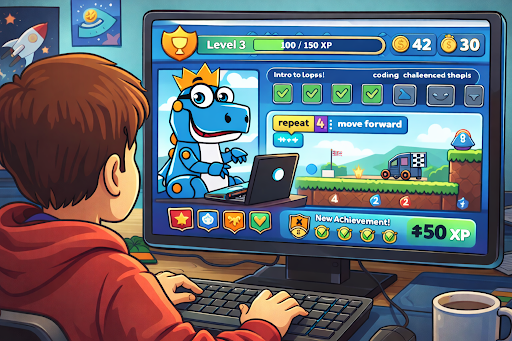
Gamified learning uses game-based elements in non-game environments. In a CS classroom, that might include:
- Points and experience systems
- Level progression
- Unlockable content
- Badges or achievements
- Instant feedback loops
- Visual progress tracking
- Leaderboards or collaborative team goals
The goal is not entertainment for its own sake. The goal is motivation, persistence, and mastery.
Why Gamification Works in Computer Science
Computer science naturally aligns with gamification because coding itself mirrors game mechanics:
- You try.
- You get feedback.
- You iterate.
- You level up your skills.
When classrooms mirror this structure intentionally, students develop resilience and confidence.
1. Immediate Feedback Fuels Growth
In traditional classrooms, students might wait days to know whether they understood a concept. In gamified CS environments, feedback is often immediate.
When a student runs code and sees what works (or what does not), they are learning in real time. That instant response reinforces understanding and reduces anxiety.
2. Visible Progress Builds Motivation
One of the most powerful psychological drivers is visible progress.
When students can see:
- What level they are on
- What skills they have mastered
- What is coming next
They feel ownership over their learning journey.
This is especially critical in CS, where skills build sequentially. Gamified structures make the path forward clear.
3. Safe Failure Encourages Risk-Taking
Coding requires experimentation. Students must be willing to try, fail, debug, and try again.
Gamified environments normalize failure. Instead of “wrong,” students see:
- Try again
- Adjust your strategy
- Earn partial credit
- Unlock the next challenge
This shift fosters a growth mindset and reduces fear of mistakes.
4. Increased Engagement Across Grade Levels
Gamification is not just for elementary students.
In K–12 CS classrooms, we consistently see that:
- Younger students thrive on visual rewards and character-based progress.
- Middle school students engage deeply with challenge systems and unlockable achievements.
- High school students respond to skill-based progression and real-world challenge pathways.
The structure scales. The design simply matures with the learner.
Beyond Motivation: Real Academic Impact
When gamification is done well, it improves more than engagement.
Research and classroom experience show it can:
- Increase time on task
- Improve retention of technical concepts
- Support differentiated pacing
- Encourage peer collaboration
- Strengthen problem-solving stamina
In computer science, stamina matters. Complex debugging tasks require sustained focus. Gamified systems reward persistence, not just correct answers.
Supporting Equity Through Gamification
Equitable CS classrooms require thoughtful design.
Gamified learning can support equity by:
- Allowing students to progress at their own pace
- Providing multiple attempts without penalty
- Offering alternative pathways to demonstrate mastery
- Making progress visible for students who may not traditionally see themselves as “tech students”
When learners see themselves leveling up, confidence grows. That confidence often transfers beyond the classroom.
What Thoughtful Gamification Looks Like
Not all gamification is effective. Simply adding points or flashy graphics does not guarantee impact.
Effective gamified CS classrooms include:
- Clear learning objectives tied to each “level”
- Mastery-based progression
- Meaningful challenges
- Feedback tied to skills, not just completion
- Opportunities for reflection
The game mechanics must serve the pedagogy, not replace it.
The Role of Platform Design
The learning platform matters.
A well-designed digital platform can make gamification seamless by integrating:
- Skill tracking dashboards
- Achievement systems
- Interactive coding environments
- Embedded formative assessments
- Visual learning journeys
At Rex K–12, our newly released TLP 2 platform was designed with this philosophy in mind. It offers a fully gamified experience that supports skill progression, accountability, and student engagement across grade levels. The focus is not on entertainment, but on building confident, capable computer science learners.
Gamification, when aligned with strong curriculum and instructional design, becomes a powerful tool to deepen learning rather than distract from it.
Preparing Students for a Future Built on Iteration
The real world of technology is iterative.
Developers test. Engineers prototype. AI models refine. Cybersecurity analysts adapt.
Gamified CS classrooms mirror this reality. They reward persistence, experimentation, and continuous improvement.
In doing so, they prepare students not just to complete assignments, but to think like technologists.
Final Thoughts
The power of gamified learning in computer science classrooms lies in its ability to:
- Make progress visible
- Normalize productive struggle
- Encourage resilience
- Increase engagement
- Strengthen mastery
When thoughtfully designed, gamification transforms CS education from a subject students complete into a journey they experience.
And in a world increasingly shaped by technology, that kind of experience matters.