Why Screen Time Isn’t Always Bad
When parents hear the phrase “screen time,” it’s often followed by concerns about social media, endless scrolling, video games, or hours spent watching videos. While it’s true that not all screen time is created equal, it’s important to remember that technology itself isn’t the problem. What matters most is how screens are being used.
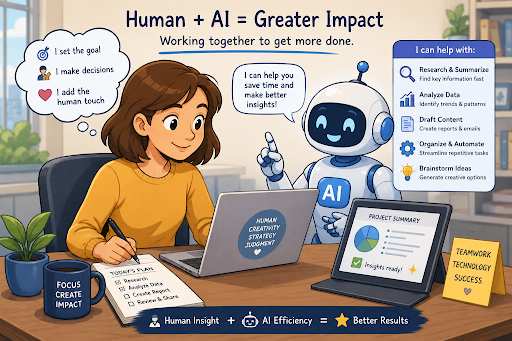
In today’s digital world, screens have become a tool for learning, creativity, problem-solving, and skill development. The conversation shouldn’t be about eliminating screen time altogether. Instead, it should focus on making screen time meaningful.
The Difference Between Passive and Active Screen Time
Not all screen time serves the same purpose.
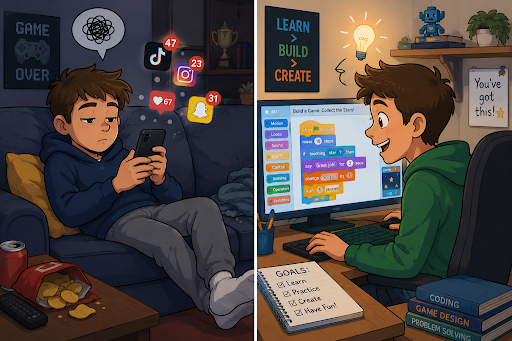
Passive screen time happens when children consume content without much engagement. Examples include scrolling through social media feeds, watching random videos, or endlessly browsing online.
Active screen time, on the other hand, requires students to think, create, solve problems, and interact with content. This type of screen time can support learning and help students build valuable skills that extend far beyond the screen itself.
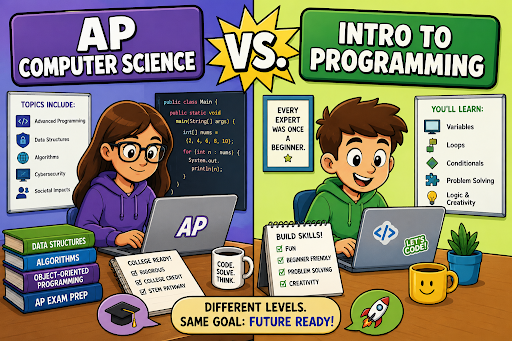
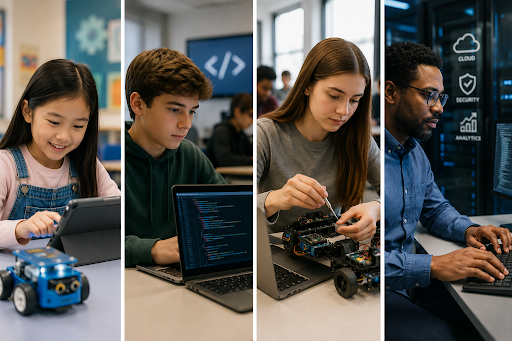
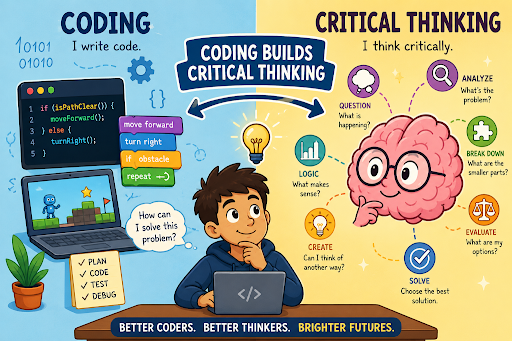
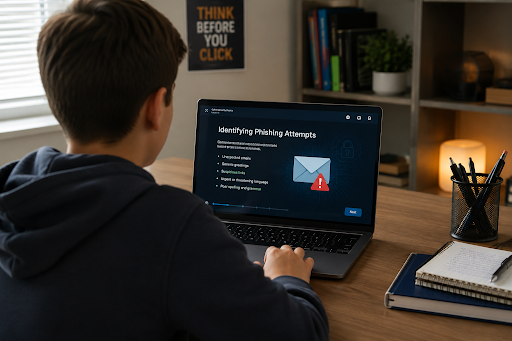
For example, a student who is learning to code, designing a website, exploring cybersecurity concepts, or creating digital artwork is actively engaging their mind. They are developing critical thinking skills, practicing persistence, and building knowledge that can support future academic and career success.
Technology Is Part of Their Future
Today’s students are growing up in a world where technology touches nearly every industry. Whether they pursue careers in healthcare, business, engineering, education, skilled trades, or the arts, digital literacy will play a role in their success.
Providing opportunities for students to learn technology skills now helps them build confidence and familiarity in a safe, structured environment.
Learning topics such as:
- Artificial Intelligence
- Coding and Computer Science
- Cybersecurity
- Digital Design
- Web Development
- Productivity Software
can help students move from simply using technology to understanding how it works.
Learning Can Still Be Fun
One of the biggest misconceptions about educational screen time is that it must feel like traditional schoolwork.
In reality, some of the most effective learning experiences are also the most engaging. Students are naturally curious, and technology provides opportunities to explore interests through interactive projects, challenges, simulations, and creative activities.
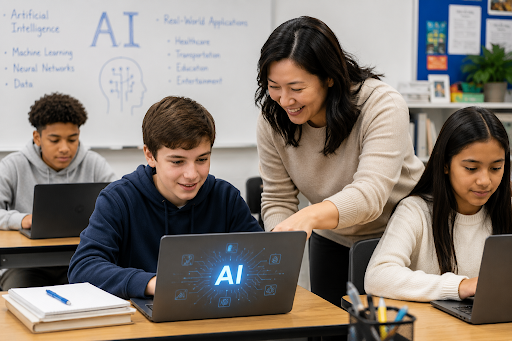
When students are designing a game, building a website, creating digital art, or experimenting with AI tools, they often don’t realize just how much they are learning because they’re having fun while doing it.
Self-Paced Learning Gives Families Flexibility
Summer breaks, weekends, and after-school hours can be difficult to fill with meaningful activities. Self-paced online courses provide a flexible option for families who want students to continue learning without adding stress to their schedules.
Students can:
- Learn at their own pace
- Explore topics that interest them
- Build new skills independently
- Practice responsibility and self-management
- Continue learning year-round
Because self-paced courses are available anytime, families can fit learning around vacations, sports, camps, and other commitments.
The Goal Isn’t Less Screen Time. It’s Better Screen Time.
Parents don’t need to feel guilty every time their child opens a laptop or tablet. Instead of asking, “How much screen time are they getting?” a better question may be, “What are they doing with that screen time?”
When students are using technology to create, learn, explore, and build skills, screen time becomes an opportunity rather than a concern.
The goal isn’t to eliminate screens from students’ lives. The goal is to help them use technology intentionally and productively.
At Rex K-12, our self-paced courses are designed to turn screen time into learning time. Students can explore topics like coding, artificial intelligence, cybersecurity, digital design, and more through engaging, flexible courses that fit their schedule while building skills that prepare them for the future.
Because sometimes the best screen time is the kind that inspires curiosity, builds confidence, and helps students discover what they’re capable of achieving.