Designing Assessments That AI Can’t Replace
Artificial Intelligence is rapidly changing the way students learn, research, write, and solve problems. In K-12 education, tools powered by AI can now summarize texts, generate essays, answer questions, create code, and even solve complex math problems in seconds. While these tools offer exciting opportunities for learning and accessibility, they also create a major challenge for educators: How do we design assessments that still measure authentic student understanding?
The answer is not to ban AI entirely. Instead, schools must rethink assessment design so that students are evaluated on skills AI cannot easily replicate, including critical thinking, creativity, collaboration, communication, and real-world application.
As computer science, AI literacy, and digital citizenship become increasingly important in K-12 education, assessment practices must evolve alongside the technology students are using every day.
Why Traditional Assessments Are Becoming Less Effective
For years, many classrooms relied heavily on assessments like:
- Multiple choice quizzes
- Basic research papers
- Vocabulary worksheets
- Standardized written responses
- Simple coding replication tasks
Today, many of these assignments can be completed quickly with AI assistance. Students can ask AI to write essays, explain concepts, debug code, or summarize entire chapters in moments.
This does not necessarily mean students are cheating. In many cases, students are simply using the tools available to them, much like calculators or spellcheck became common in earlier generations.
The real issue is that traditional assessments often measure output instead of thinking.
If an assignment can be completed without genuine reasoning, reflection, creativity, or application, it becomes increasingly difficult to determine what a student truly understands.
The Shift From “What Students Know” to “How Students Think”
Modern assessment design must prioritize the learning process, not just the final product.
In K-12 classrooms, this means designing assessments that ask students to:
- Explain their reasoning
- Defend decisions
- Reflect on mistakes
- Apply knowledge to unfamiliar scenarios
- Create original solutions
- Collaborate with peers
- Demonstrate understanding verbally or interactively
AI can generate information, but it struggles to replicate authentic human experiences, personal reflection, nuanced classroom discussion, and real-time problem solving.
When educators focus on these areas, assessments become more meaningful and significantly harder for AI to replace.
Examples of AI-Resistant Assessments in K-12 Education
Project-Based Learning
Project-based learning naturally encourages authentic assessment because students must create, iterate, and present original work.
For example:
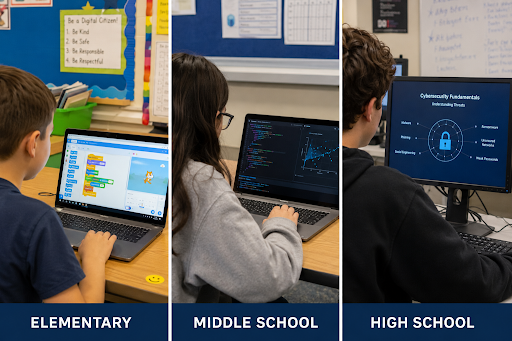
- Elementary students might design a digital story teaching internet safety
- Middle school students could create a basic game using block coding platforms
- High school students may build a cybersecurity awareness campaign for their community
These types of projects require students to make decisions, solve problems, and explain their thinking throughout the process.
The final product matters, but the process matters even more.
Oral Defenses and Presentations
One of the simplest ways to create AI-resistant assessments is through student explanation.
After completing an assignment, students can:
- Present their work
- Answer follow-up questions
- Explain their decision-making
- Reflect on challenges and revisions
This approach works especially well in computer science and AI education, where students can demonstrate not only what they created, but why they created it a certain way.
A student who truly understands the material can discuss it confidently. A student who relied entirely on AI-generated work often struggles to explain the deeper reasoning behind their submission.
Real-World Problem Solving
Authentic assessments become much stronger when connected to real-world situations.
Instead of asking students to memorize information, educators can ask them to apply skills in meaningful contexts.
Examples include:
- Designing a website for a local organization
- Creating an AI prompt that avoids bias
- Developing a cybersecurity response plan
- Using data analysis to solve a community problem
- Writing code to automate a real classroom task
These assessments mirror the kinds of challenges students may encounter in future careers, making learning more relevant and engaging.
Reflection-Based Assessments
Reflection is one of the most powerful tools educators can use in the age of AI.
Students can be asked to describe:
- What they learned
- What challenged them
- What strategies worked best
- How they improved
- What they would do differently next time
Even if AI assists with portions of a project, meaningful reflection helps teachers evaluate authentic understanding and growth.
Reflection also encourages metacognition, helping students become more aware of how they learn.
Process Documentation Matters
Instead of grading only the final result, educators should evaluate the full learning journey.
This can include:
- Draft submissions
- Planning documents
- Brainstorming sessions
- Version histories
- Coding checkpoints
- Peer feedback
- Teacher conferences
In computer science classrooms, for example, reviewing a student’s development process often reveals far more about their understanding than the final program alone.
Teaching Students to Use AI Responsibly
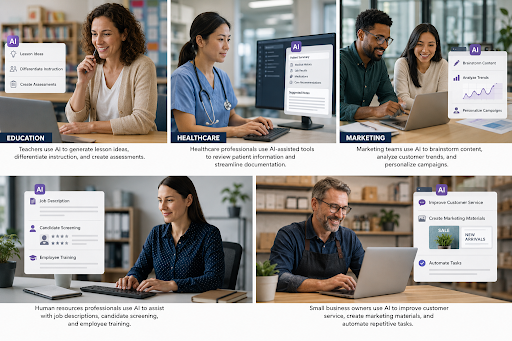
An important reality is that AI will remain part of the workforce students enter after graduation.
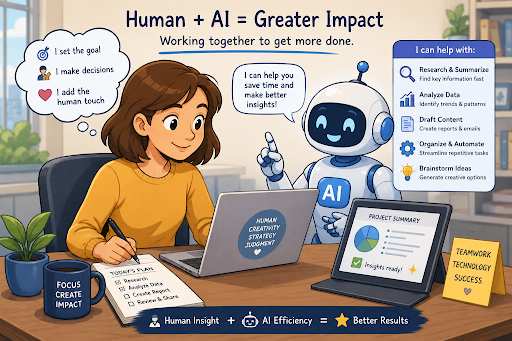
Because of this, schools should not focus solely on preventing AI use. They should also teach students how to use AI ethically, responsibly, and effectively.
This includes teaching students:
- How to verify AI-generated information
- How to recognize bias in AI outputs
- When AI assistance is appropriate
- How to cite AI usage when required
- Why human oversight still matters
In many careers, employees will use AI tools regularly. The key skill will not be avoiding AI entirely, but learning how to think critically while using it.
The Role of Computer Science and AI Education
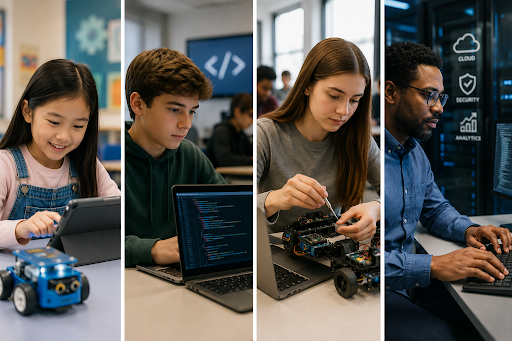
Computer science and AI education are uniquely positioned to help students navigate this changing landscape.
Strong K-12 technology programs can teach students:
- Computational thinking
- Ethical technology use
- Digital literacy
- Problem solving
- Creativity
- Adaptability
These skills remain valuable regardless of how advanced AI becomes.
At organizations like Rex K-12, the focus is not simply on teaching students how to use technology. It is about helping students understand technology deeply enough to think critically, solve problems, and adapt in an evolving digital world.
The Future of Assessment Is Human-Centered
As AI continues to evolve, assessment practices must evolve too.
The strongest assessments will focus less on memorization and more on:
- Creativity
- Critical thinking
- Communication
- Collaboration
- Real-world application
- Reflection
- Ethical reasoning
These are the skills that truly prepare students for future careers and lifelong learning.
AI may change education, but it cannot replace authentic human thinking, curiosity, and creativity. Effective assessment design ensures those qualities remain at the center of learning.