Is Coding Still Relevant in the Age of AI?
Artificial Intelligence is changing the world at a pace few could have predicted. From chatbots writing essays to AI systems generating images, music, and even software code, many educators and parents are beginning to ask an important question: If AI can code for us, do students still need to learn coding?
The short answer is yes — perhaps now more than ever.
The role of coding is evolving, but it is far from obsolete. In fact, the rise of AI is reshaping why coding matters and how schools should approach computer science education in K–12 classrooms.
AI Can Generate Code — But It Cannot Replace Understanding
Modern AI tools can write snippets of code in seconds. A student can ask an AI chatbot to create a simple game, build a website, or debug an error message. While this technology is powerful, it does not eliminate the need for foundational coding knowledge.
Students who do not understand coding concepts often struggle to:
- Identify incorrect or unsafe AI-generated outputs
- Troubleshoot when something breaks
- Understand why code works
- Adapt projects to meet real needs
- Think critically about technology
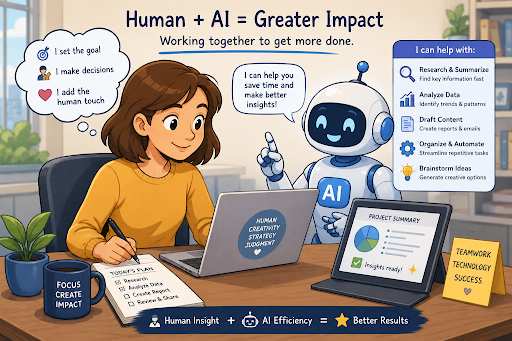
AI can accelerate development, but students still need the underlying knowledge to guide it effectively.
Think of it this way: calculators did not eliminate the need for math instruction. Instead, math education shifted toward deeper conceptual understanding and problem-solving. Coding education is experiencing a similar transformation.
Coding Teaches More Than Programming
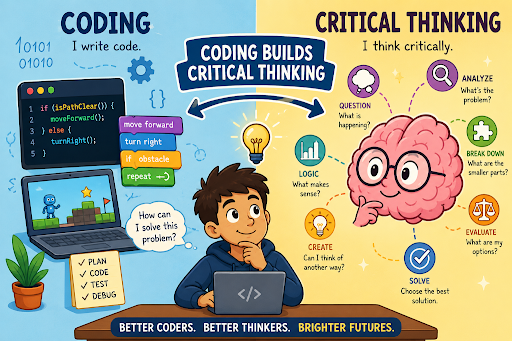
One of the biggest misconceptions about coding is that it only prepares students to become software engineers. In reality, coding develops transferable skills that benefit students in nearly every career path.
K–12 coding instruction helps students build:
- Logical reasoning
- Problem-solving skills
- Creativity
- Persistence
- Collaboration
- Computational thinking
- Digital literacy
These are foundational workforce skills in an increasingly technology-driven society.
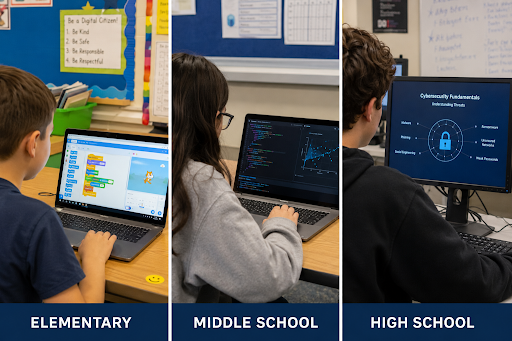
A student creating a Scratch animation in elementary school is not just learning programming syntax. They are learning sequencing, cause and effect, debugging, and creative problem-solving. A middle school student building a game is learning systems thinking and iteration. A high school student studying Python is learning how technology can automate tasks and analyze information.
These skills remain highly relevant even as AI tools become more advanced.
The Future Workforce Will Still Need Technical Thinkers
AI is not eliminating technology careers. Instead, it is changing the nature of them.
Future professionals will need to:
- Work alongside AI tools
- Evaluate AI-generated solutions
- Build AI-supported applications
- Understand automation systems
- Identify bias and ethical concerns
- Protect cybersecurity and data privacy
- Solve problems AI cannot independently solve
Students who understand coding concepts will have a major advantage in this future landscape.
Even careers outside traditional technology fields are increasingly incorporating coding and automation. Agriculture, healthcare, business, marketing, engineering, manufacturing, and education are all becoming more technology-dependent.
Teaching coding in K–12 education is no longer just about preparing “future programmers.” It is about preparing digitally fluent citizens.
AI Makes Coding More Accessible for Students
Interestingly, AI may actually help more students succeed in coding.
Traditionally, beginner programmers could become frustrated when they encountered confusing errors or got stuck on small mistakes. AI tools can now provide instant explanations, suggestions, and feedback that help students continue learning instead of giving up.
This creates exciting opportunities for educators:
- Students can prototype ideas faster
- Teachers can personalize support
- Beginners can receive immediate feedback
- Complex concepts can become more approachable
- Creativity can flourish without as many technical barriers
Rather than replacing coding education, AI can enhance it when used responsibly.
The goal should not be to prevent students from using AI tools. Instead, schools should teach students how to use them thoughtfully, ethically, and critically.
Coding Education Must Evolve
While coding remains relevant, the way schools teach it should continue evolving.
Modern computer science education should include:
- Computational thinking
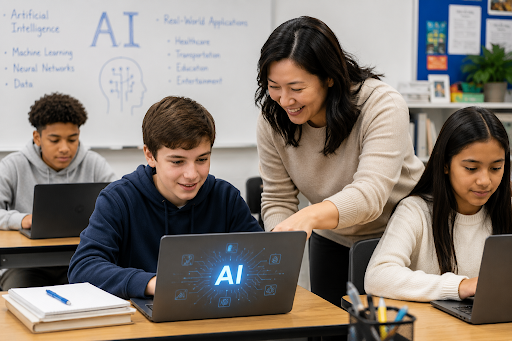
- AI literacy
- Digital citizenship
- Ethical technology use
- Problem-solving
- Creativity and innovation
- Real-world project development
Students should still learn coding fundamentals, but they should also learn how AI systems work, where their limitations exist, and how humans remain responsible for the technology they create.
This means K–12 programs should focus less on memorizing syntax and more on building adaptable thinkers who can navigate changing technologies.
Starting Early Matters
Introducing coding and computer science at an early age helps students develop confidence with technology long before career decisions are made.
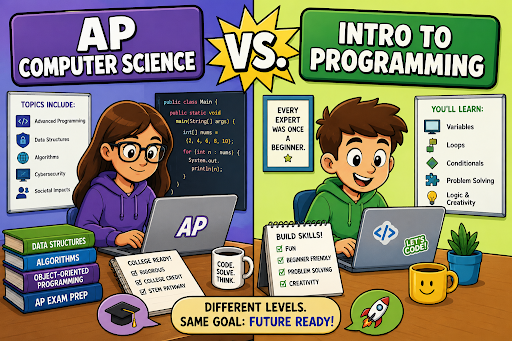
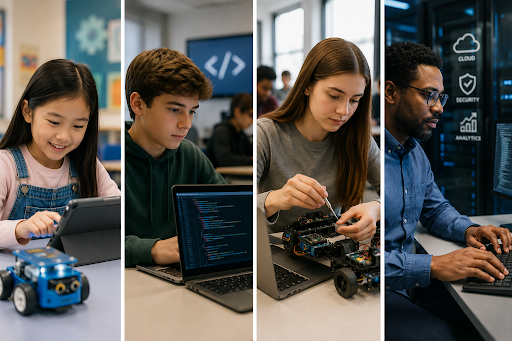
Elementary students can begin with block-based coding platforms like Scratch Jr. and Scratch. Middle school students can explore game development, web design, or robotics. High school students can move into advanced programming languages, AI concepts, cybersecurity, and certification-aligned pathways.
Early exposure helps students:
- Build confidence
- Reduce fear around technology
- Discover career interests
- Develop persistence
- Learn creative problem-solving habits
In an AI-driven world, these experiences become even more valuable.
The Real Question Is Not “Coding or AI?”
The future is not a choice between coding and AI.
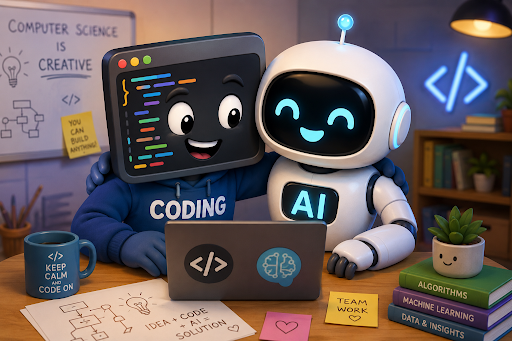
The future belongs to students who understand how to use both together.
AI tools are becoming part of everyday life, but students still need the foundational thinking skills that coding develops. Schools that continue investing in meaningful computer science education are helping students become creators, innovators, and critical thinkers — not just passive consumers of technology.
Coding is still relevant.
What is changing is the opportunity: students today are not just learning to code. They are learning how to shape the future of technology itself.