Cybersecurity Career Pathways Explained: A K–12 Guide to Building Future-Ready Skills
Cybersecurity is no longer a niche career field reserved for highly specialized IT professionals. In today’s digital world, cybersecurity impacts nearly every industry, from healthcare and finance to agriculture, education, manufacturing, and government services. As technology continues to evolve, the demand for cybersecurity professionals is growing rapidly, making cybersecurity education one of the most valuable investments schools can make for student success.
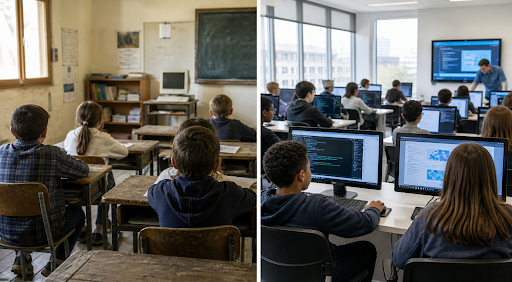
For K–12 schools, introducing cybersecurity pathways early gives students the opportunity to develop real-world technical skills, explore meaningful career options, and prepare for workforce opportunities that are both stable and high-paying. Whether students pursue college, certifications, military service, or direct entry into the workforce, cybersecurity education can open doors.
What Is a Cybersecurity Career Pathway?
A cybersecurity career pathway is a structured learning journey that helps students build foundational technology knowledge before advancing into more specialized cybersecurity concepts and workforce skills.
Rather than treating cybersecurity as a single class, effective pathways allow students to gradually develop their understanding over time through hands-on projects, certifications, simulations, and career exploration.
A strong K–12 cybersecurity pathway often includes:
- Digital literacy and internet safety
- Keyboarding and computer basics
- Introductory coding or computational thinking
- Networking and systems concepts
- Cybersecurity fundamentals
- Ethical hacking concepts
- Cyber defense strategies
- Cloud security and AI awareness
- Industry certification preparation
This layered approach ensures students are not overwhelmed while still building meaningful technical competencies over time.
Why Cybersecurity Education Matters in K–12
The workforce demand for cybersecurity professionals continues to rise globally. Organizations of every size need employees who understand how to protect systems, networks, and sensitive information.
Unfortunately, many students are unaware these careers even exist.
By introducing cybersecurity concepts in K–12 education, schools can:
- Expand workforce readiness opportunities
- Introduce students to high-demand careers
- Develop critical thinking and problem-solving skills
- Improve digital citizenship and online safety awareness
- Support Career and Technical Education (CTE) initiatives
- Help close technology skill gaps in underserved communities
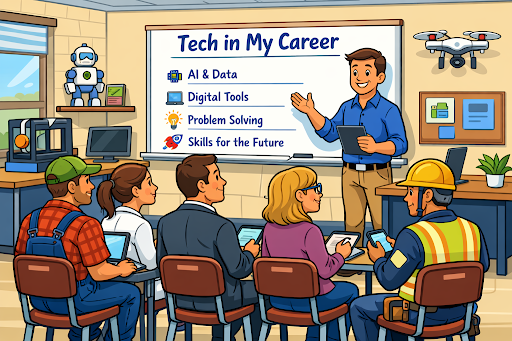
Cybersecurity education also supports broader workforce development goals because the skills students learn are transferable across many industries.
Cybersecurity Careers Students Can Explore
One of the biggest misconceptions about cybersecurity is that all professionals do the same type of work. In reality, cybersecurity is an incredibly diverse field with career opportunities for students with many different strengths and interests.
Here are just a few cybersecurity careers students may eventually pursue:
Security Analyst
Security analysts monitor systems for threats, investigate suspicious activity, and help organizations strengthen their defenses.
Ethical Hacker
Ethical hackers test systems for vulnerabilities before malicious attackers can exploit them.
Cloud Security Specialist
As organizations move to cloud platforms, cloud security professionals help secure digital infrastructure and data storage.
Cybersecurity Engineer
Cybersecurity engineers design and implement secure systems, networks, and protection strategies.
Digital Forensics Investigator
These professionals investigate cybercrimes, analyze digital evidence, and support law enforcement or corporate investigations.
Security Awareness Trainer
Not all cybersecurity careers are deeply technical. Some professionals focus on educating employees and organizations about cybersecurity best practices.
AI and Cybersecurity Specialist
As artificial intelligence becomes more integrated into daily systems, cybersecurity professionals increasingly work to secure AI tools and defend against AI-powered threats.
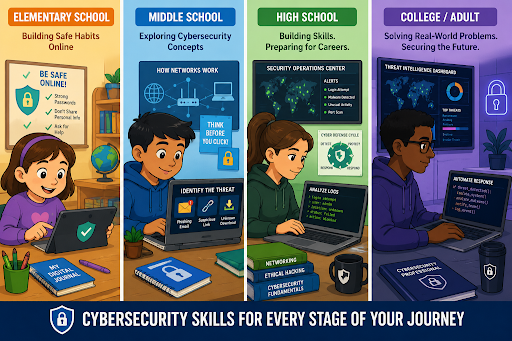
What Cybersecurity Looks Like Across Grade Levels
A successful K–12 cybersecurity pathway is age-appropriate and scaffolded carefully.
Elementary School: Building Digital Awareness
At the elementary level, cybersecurity instruction should focus on foundational digital citizenship skills such as:
- Creating strong passwords
- Identifying safe vs. unsafe online behavior
- Protecting personal information
- Understanding internet safety basics
- Developing responsible technology habits
Students can also begin learning logical thinking and problem-solving through beginner coding activities and gamified computer science experiences.
Middle School: Exploring Technical Concepts
Middle school is often the ideal time to introduce students to:
- Basic networking concepts
- Cybersecurity terminology
- Online threat awareness
- Introductory coding
- Encryption basics
- Ethical technology use
Hands-on labs and simulations can help students engage with cybersecurity in meaningful ways without requiring advanced technical knowledge.
High School: Workforce Readiness and Certifications
At the high school level, cybersecurity pathways can become much more career-focused.
Students may explore:
- Ethical hacking simulations
- Network defense strategies
- Security tools and software
- Cloud computing
- AI-related cybersecurity concepts
- Industry certifications
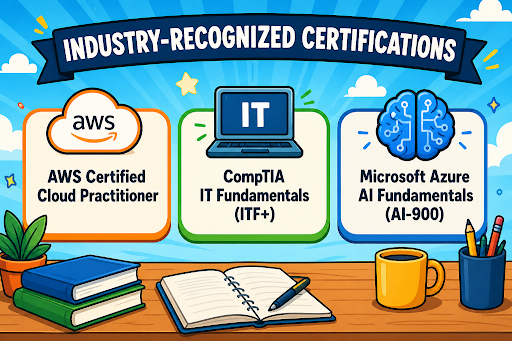
Many schools now align courses with certifications such as:
- CompTIA IT Fundamentals (ITF+)
- CompTIA Security+
- AWS Certified Cloud Practitioner
- Microsoft Azure AI Fundamentals (AI-900)
These certifications help students build confidence while also strengthening resumes, college applications, and workforce readiness.
The Role of Certifications in Workforce Development
Certification-aligned cybersecurity pathways are becoming increasingly important because they help students demonstrate practical skills to employers and postsecondary institutions.
Unlike traditional assessments alone, certifications provide students with measurable, industry-recognized achievements.
For schools, certification pathways can:
- Support CTE and workforce development initiatives
- Increase student engagement through real-world goals
- Strengthen partnerships with local industries
- Prepare students for internships and apprenticeships
- Help students enter the workforce faster
Even students who do not pursue cybersecurity careers directly benefit from understanding digital safety, responsible technology use, and systems thinking.
Why Hands-On Learning Matters
Cybersecurity cannot be learned through lecture alone.
Students learn best when they actively engage with simulations, labs, projects, and real-world problem-solving scenarios.
Effective cybersecurity programs often include:
- Scenario-based learning
- Simulated cyberattacks and defenses
- Interactive labs
- Team collaboration
- Problem-solving challenges
- Certification practice activities
- Project-based assessments
Hands-on learning also helps students build confidence in technical environments and encourages persistence when solving complex problems.
Creating Accessible Cybersecurity Opportunities for All Students
One of the most important goals in K–12 cybersecurity education is accessibility.
Historically, many technology pathways have been limited to students who already had access to resources, prior experience, or strong technical confidence. Modern cybersecurity programs should work intentionally to expand participation.
Schools can improve accessibility by:
- Introducing cybersecurity concepts early
- Providing beginner-friendly pathways
- Offering flexible learning models
- Supporting diverse learning styles
- Encouraging participation from underrepresented groups
- Using gamified and engaging curriculum experiences
Cybersecurity pathways should not feel exclusive. Every student deserves the opportunity to explore future-ready technology careers.
The Future of Cybersecurity Education
Cybersecurity is not a temporary trend. As technology becomes increasingly integrated into daily life, cybersecurity knowledge will become essential across nearly every profession.
Future-ready schools are already recognizing that cybersecurity education is about more than preparing future analysts or engineers. It is about helping students become informed digital citizens, adaptable problem-solvers, and workforce-ready learners.
Students who begin exploring cybersecurity in K–12 education today may eventually become:
- Security analysts
- AI security specialists
- Cloud engineers
- Digital investigators
- Software developers
- Technology consultants
- Cyber defense leaders
The opportunities are enormous, and the need for skilled professionals continues to grow.
Final Thoughts
Cybersecurity career pathways provide schools with an incredible opportunity to connect classroom learning to real-world workforce development. By introducing cybersecurity concepts early and building structured pathways over time, schools can help students develop valuable technical skills while preparing them for high-demand careers.
Whether students pursue certifications, college programs, apprenticeships, or direct workforce entry, cybersecurity education equips them with future-ready competencies that will remain relevant for years to come.
As the digital world continues to evolve, K–12 schools have the opportunity to help shape the next generation of innovators, defenders, and technology leaders.