Corporate Partnerships and School Tech Programs
In today’s rapidly evolving workforce, schools are under increasing pressure to prepare students for careers that may not have even existed a decade ago. From artificial intelligence and cybersecurity to cloud computing and software development, technology is reshaping every industry. Yet many schools face a major challenge: how do they provide meaningful, modern technology education with limited budgets, staffing shortages, and ever-changing industry demands?
One of the most effective solutions is the development of strong corporate partnerships within school technology programs.
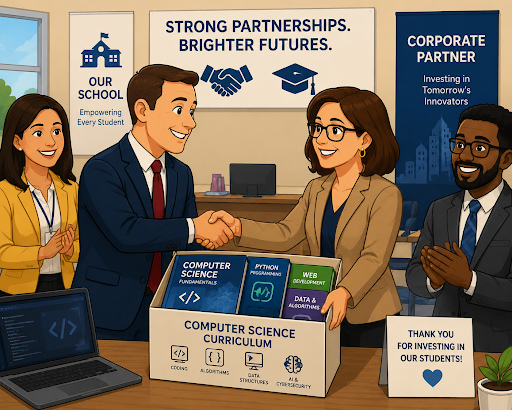
When schools and industry leaders collaborate, students gain access to real-world learning experiences, educators receive valuable support, and businesses help build the future workforce they will eventually depend on. These partnerships are no longer simply beneficial. They are becoming essential for sustainable and relevant K–12 technology education.
Why Corporate Partnerships Matter in K–12 Technology Education
Technology moves quickly. Traditional curriculum cycles often cannot keep pace with industry changes. Corporate partnerships help bridge this gap by bringing current industry practices, tools, and insights directly into classrooms.
A strong partnership between schools and technology-focused organizations can help provide:
- Up-to-date curriculum and resources
- Exposure to industry certifications
- Workforce development opportunities
- Career exploration experiences
- Mentorship and guest speakers
- Real-world project applications
- Teacher training and professional development
- Access to modern software and platforms
For many districts, especially those in rural or underfunded areas, these partnerships can significantly expand opportunities students may not otherwise have access to.
Building Career-Ready Students
One of the biggest benefits of corporate partnerships is the direct connection between classroom learning and workforce readiness.
Students often ask a simple but important question:
“How will I actually use this in the real world?”
Corporate partnerships answer that question clearly.
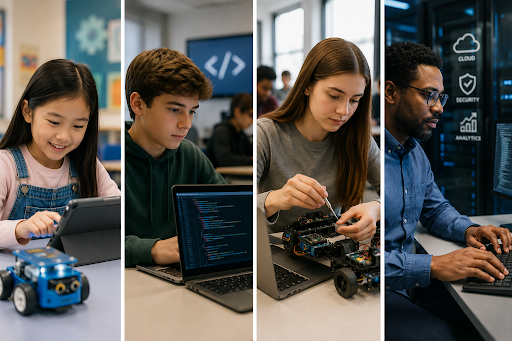
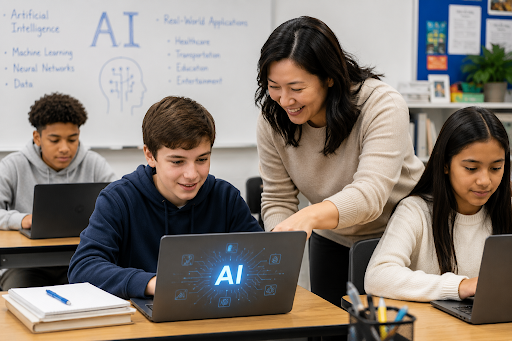
When students engage with programs connected to real companies and industries, they begin to see the direct pathway between education and future careers. Whether students are learning coding, cloud computing, AI prompt engineering, cybersecurity, web development, or digital design, partnerships help contextualize these skills within authentic career pathways.
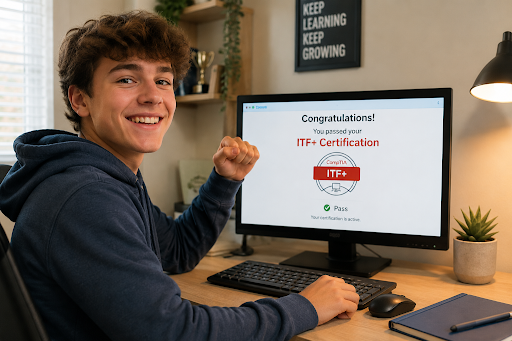
For example, partnerships connected to certifications like:
- AWS Certified Cloud Practitioner
- CompTIA IT Fundamentals (ITF+)
- Microsoft Azure AI Fundamentals (AI-900)
can provide students with exposure to industry-recognized credentials while still in middle or high school.
This not only increases student engagement but also helps schools align their programs with workforce development goals.
Supporting Schools Facing Teacher Shortages
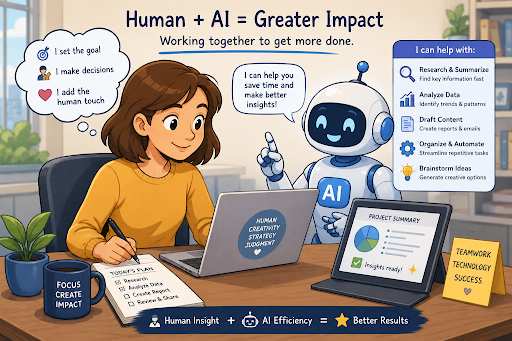
Across the country, schools are struggling to find qualified computer science and technology teachers. This challenge is especially difficult in emerging fields like AI, cybersecurity, and cloud computing, where industry professionals often earn significantly higher salaries outside education.
Corporate partnerships can help schools overcome these staffing barriers in several ways:
1. Curriculum and Instructional Support
Some organizations provide turnkey curriculum solutions with embedded instructional supports, teacher guides, training videos, and pacing resources that allow schools to confidently offer technology courses even if teachers are new to the subject area.
2. Virtual Instruction Options
Schools can partner with organizations that provide qualified virtual instructors to teach specialized courses remotely. This expands access to advanced technology programs without requiring schools to hire hard-to-find staff locally.
3. Professional Development
Corporate partners often offer teacher training opportunities that help educators build confidence and stay current with industry trends and tools.
This collaborative approach allows schools to focus on student success rather than constantly struggling to fill staffing gaps.
Creating Equitable Access to Technology Education
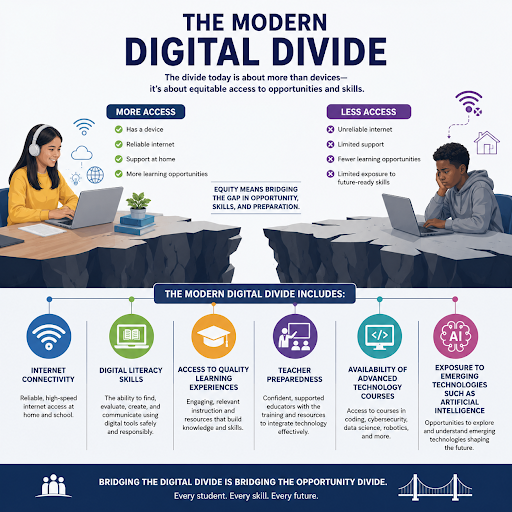
Not every student has equal access to high-quality technology education.
Students in smaller districts, rural communities, or underfunded schools are often the least likely to have access to advanced computer science pathways. Corporate partnerships can help level the playing field.
By partnering with educational organizations, technology companies, nonprofits, and workforce development groups, schools can:
- Expand course offerings
- Reduce program startup costs
- Provide access to industry tools
- Offer certification preparation opportunities
- Introduce younger students to STEM pathways earlier
This is especially important as technology literacy becomes essential across nearly every career field, not just traditional tech jobs.
What Successful School-Corporate Partnerships Look Like
The most effective partnerships are collaborative, student-centered, and sustainable.
Strong partnerships typically include:
Shared Goals
Both the school and corporate partner should clearly understand the desired outcomes, whether that involves workforce readiness, certification pathways, career exposure, or expanding access to technology education.
Long-Term Support
The strongest partnerships are ongoing relationships rather than one-time donations or events. Sustainable partnerships create consistent opportunities for students and teachers over time.
Real-World Relevance
Programs should connect directly to modern industry skills and evolving workforce demands.
Accessibility
Partnerships should prioritize equity and accessibility so all students can participate regardless of background or prior experience.
Preparing Students for the Future Workforce
The future workforce will require adaptability, digital literacy, collaboration, and problem-solving skills. Technology education programs supported by corporate partnerships help students develop these competencies in meaningful and engaging ways.
More importantly, these partnerships help students envision themselves in future careers they may never have previously considered.
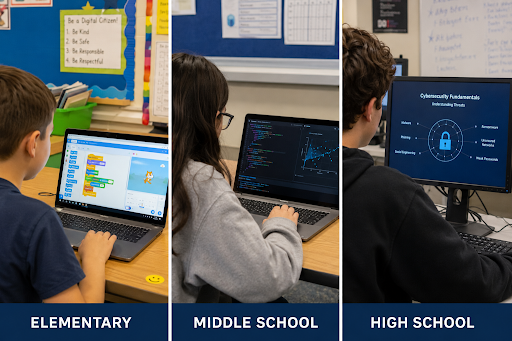
A middle school student experimenting with coding today could become tomorrow’s cybersecurity analyst, AI engineer, cloud architect, or software developer.
That pathway often begins with exposure, opportunity, and support.
The Future of School Technology Programs
As technology continues to evolve, schools cannot operate in isolation. Meaningful collaboration between education and industry will play a critical role in preparing students for future success.
Corporate partnerships are not simply about funding or sponsorships. They are about creating authentic learning experiences, expanding access, supporting educators, and helping students build skills that truly matter in today’s world.
When schools and industry work together, students benefit most.
And ultimately, that investment benefits everyone.