How to Support Non-CS Teachers in Teaching AI
Artificial Intelligence (AI) is quickly becoming one of the most important topics students need to understand. From AI-powered search engines to image generators and workplace automation tools, AI is already influencing how we learn, work, and communicate. As schools work to prepare students for an AI-driven future, many are discovering a common challenge: most teachers are not computer science teachers.
The good news? They do not need to be.
With the right support, resources, and mindset, educators from virtually any subject area can successfully introduce AI concepts and help students develop essential AI literacy skills.
Start with AI Literacy, Not Computer Science
One of the biggest misconceptions about teaching AI is that it requires coding experience. While programming can be part of advanced AI studies, AI literacy focuses on helping students understand:
- What AI is and how it works
- Where AI is used in everyday life
- The benefits and limitations of AI systems
- Ethical considerations and responsible use
- How to critically evaluate AI-generated content
These topics fit naturally into many existing subjects, including English, Social Studies, Business, Career Readiness, Technology Applications, and even Art.
Teachers do not need to understand machine learning algorithms to facilitate meaningful conversations about AI’s role in society.
Provide Ready-to-Use Curriculum
The fastest way to build teacher confidence is to remove the burden of creating lessons from scratch.
Many educators are already balancing packed schedules, grading responsibilities, and state standards. Asking them to become AI experts overnight is unrealistic.
Schools can support teachers by providing:
- Structured lesson plans
- Student activities and worksheets
- Discussion guides
- Assessments and quizzes
- Presentation materials
When resources are organized and easy to implement, teachers can focus on facilitating learning rather than spending hours researching AI concepts.
Focus on Facilitation Rather Than Expertise
Teachers often feel pressure to have all the answers before introducing a new topic. With AI, that mindset can actually become a barrier.
The field evolves so quickly that even AI professionals are constantly learning.
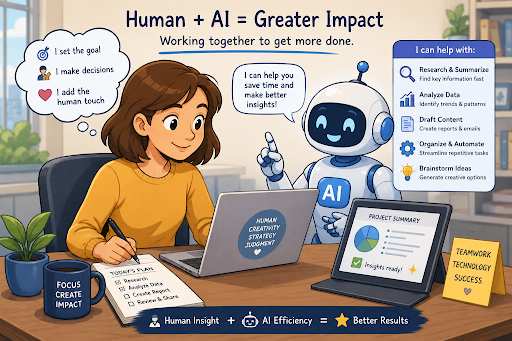
Instead of positioning teachers as AI experts, schools should encourage them to act as learning facilitators. Teachers can guide discussions, ask critical-thinking questions, and help students evaluate information while exploring AI together.
Phrases like:
- “What do you think?”
- “Why might that happen?”
- “How could this impact people?”
- “What concerns would you have?”
can lead to powerful classroom discussions without requiring deep technical expertise.
Create Opportunities for Hands-On Learning
Students learn best when they can actively engage with concepts.
Rather than only reading about AI, provide opportunities for students to:
- Interact with AI tools
- Practice writing prompts
- Analyze AI-generated content
- Investigate examples of bias
- Explore AI careers
- Debate ethical scenarios
Hands-on experiences help students move beyond theory and develop practical understanding of how AI functions in the real world.
These activities also make teaching more enjoyable and less intimidating for educators who are new to the topic.
Build a Culture of Continuous Learning
AI is not a one-time initiative. It is a rapidly evolving field that will continue changing for years to come.
Schools can support teachers by creating ongoing learning opportunities such as:
- Professional development sessions
- Collaborative planning meetings
- Shared resource libraries
- Peer mentoring
- Access to updated curriculum materials
When teachers feel supported and connected to a larger learning community, they are far more likely to embrace new technologies and instructional approaches.
Connect AI to Real-World Careers
One of the most engaging aspects of AI education is helping students understand how these technologies connect to future careers.
Students are often surprised to learn that AI is impacting fields such as:
- Healthcare
- Marketing
- Manufacturing
- Agriculture
- Education
- Finance
- Entertainment
- Cybersecurity
By highlighting real-world applications, teachers can help students see the relevance of AI regardless of their future career interests.
The Goal Is Confidence, Not Perfection
The most successful AI programs are not necessarily led by computer science experts. They are led by educators who are willing to learn alongside their students and facilitate meaningful exploration.
Schools that provide clear curriculum, practical resources, and ongoing support can empower any teacher to successfully introduce AI concepts in the classroom.
The goal is not to turn every teacher into a programmer. The goal is to help students become informed, responsible, and confident users of AI technologies.
Looking for an Easy Way to Bring AI Education to Your School?
Rex K-12’s AI Foundations course was specifically designed to help schools introduce AI concepts without requiring teachers to have a computer science background. This teacher-friendly course explores AI literacy, prompt engineering, ethics, bias, media creation, careers, and responsible AI use through engaging lessons, discussions, projects, and hands-on activities.
Whether you’re serving middle school students, high school learners, or workforce development participants, AI Foundations provides the curriculum, structure, and support needed to confidently bring AI education into your classroom.
Learn more about AI Foundations and other AI learning opportunities at www.rexk12.com.