
AI Literacy for Non-Technical Professionals
Artificial Intelligence (AI) is no longer a technology reserved for software engineers and data scientists. Today, AI is being integrated into nearly every industry, from healthcare and education to marketing, finance, manufacturing, and human resources. As AI becomes a standard workplace tool, a new skill is emerging as essential for professionals across all fields: AI literacy.
The good news? You do not need to know how to code or build machine learning models to be AI literate.
What Is AI Literacy?
AI literacy is the ability to understand, evaluate, and effectively use AI tools and technologies in your work and daily life. It involves knowing what AI can do, recognizing its limitations, understanding ethical considerations, and using AI responsibly to solve problems.
Think of AI literacy like digital literacy twenty years ago. Most professionals do not need to know how the internet works behind the scenes, but they do need to know how to use email, search for information, and collaborate online. AI literacy follows the same principle.
Why AI Literacy Matters
Many professionals assume AI will only impact technical careers. In reality, AI is already changing how work gets done across nearly every profession.
Consider these examples:
- Teachers use AI to generate lesson ideas, differentiate instruction, and create assessments.
- Healthcare professionals use AI-assisted tools to review patient information and streamline documentation.
- Marketing teams use AI to brainstorm content, analyze customer trends, and personalize campaigns.
- Human resources professionals use AI to assist with job descriptions, candidate screening, and employee training.
- Small business owners use AI to improve customer service, create marketing materials, and automate repetitive tasks.
As AI adoption continues to grow, professionals who understand how to leverage these tools will have a significant advantage over those who do not.
The Core Components of AI Literacy
Understanding What AI Is (and Isn’t)
One of the biggest misconceptions about AI is that it is either all-powerful or completely autonomous. In reality, most AI systems are designed to perform specific tasks based on patterns found in large amounts of data.
AI can:
- Analyze information quickly
- Generate text, images, and code
- Identify patterns and trends
- Automate repetitive tasks
AI cannot:
- Think like a human
- Understand context perfectly
- Guarantee accurate information
- Replace human judgment and expertise
Understanding these strengths and limitations is the foundation of AI literacy.
Learning How to Communicate with AI
Effective AI use often depends on the quality of the instructions provided.
This skill, commonly called prompt engineering, involves learning how to:
- Ask clear questions
- Provide context
- Define goals and expectations
- Refine requests based on results
Professionals who can effectively communicate with AI tools often achieve significantly better outcomes than those who rely on vague or incomplete prompts.
Evaluating AI Outputs
AI-generated content should never be accepted blindly.
AI-literate professionals know how to:
- Verify facts
- Check sources
- Identify potential bias
- Review outputs for accuracy and quality
- Apply human judgment before making decisions
The ability to critically evaluate AI-generated information is becoming just as important as the ability to generate it.
Understanding Ethics and Responsible Use
As AI becomes more common, ethical considerations become increasingly important.
Professionals should understand:
- Data privacy concerns
- Potential bias in AI systems
- Intellectual property considerations
- Transparency and disclosure practices
- Responsible decision-making when using AI tools
Organizations increasingly expect employees to use AI responsibly and ethically, making this knowledge valuable across industries.
AI Literacy Is Becoming a Workplace Skill
Several years ago, listing “computer skills” on a resume helped candidates stand out. Today, basic digital skills are simply expected.
AI literacy is moving in the same direction.
Many employers are beginning to seek candidates who can:
- Work alongside AI tools
- Increase productivity using automation
- Make informed decisions about AI-generated content
- Adapt to rapidly changing technology
In the coming years, AI literacy may become as fundamental as email, spreadsheets, and online collaboration tools.
How Professionals Can Start Building AI Literacy
Getting started does not require a technical background or advanced training.
Here are a few simple steps:
Explore Popular AI Tools
Experiment with tools that generate text, summarize information, create images, or assist with research. Hands-on experience is often the fastest way to learn.
Learn AI Terminology
Become familiar with concepts such as:
- Generative AI
- Machine learning
- Large language models
- Prompt engineering
- AI bias
Understanding common terminology helps professionals navigate conversations about AI with greater confidence.
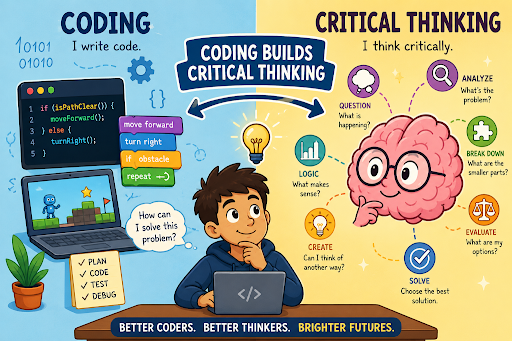
Practice Critical Thinking
Whenever using AI:
- Question the output
- Verify important information
- Compare multiple sources
- Consider potential limitations
Critical thinking remains one of the most valuable human skills in an AI-powered world.
Stay Informed
AI technology evolves rapidly. Reading articles, attending webinars, participating in professional development, and taking introductory AI courses can help professionals stay current without becoming technical experts.
The Future Belongs to AI-Literate Professionals
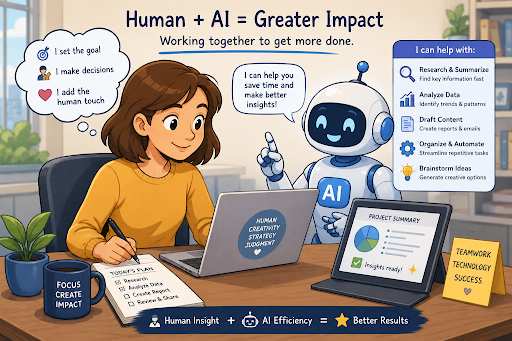
The future of work is not about humans competing against AI. It is about humans learning to work effectively with AI.
Organizations will continue to adopt AI tools because they improve efficiency, enhance creativity, and support better decision-making. The professionals who thrive will be those who understand how to use these tools thoughtfully, ethically, and strategically.
You do not need to become a programmer to succeed in an AI-driven workplace. You simply need the knowledge and confidence to understand what AI can do, recognize its limitations, and apply it responsibly to your work.
AI literacy is quickly becoming one of the most important professional skills of the next decade. The best time to start building it is now.